
Home / Mould Inspection
STANMORE HA7 / PROPERTY ASSESSMENT
Mould Inspection in Stanmore
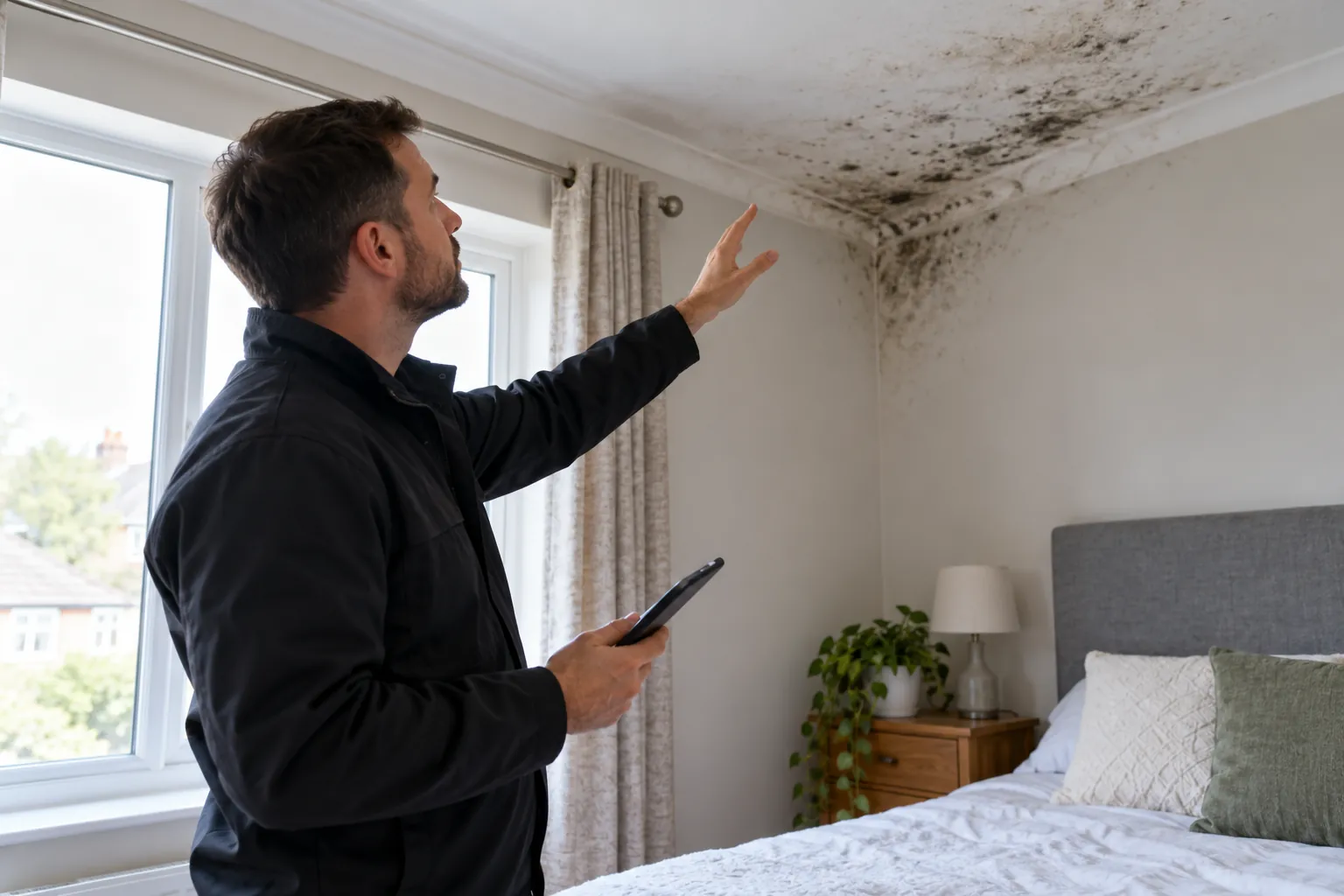
A focused inspection of visible growth, affected materials and the conditions around them. Explain where mould is appearing and what has already been tried, so the visit can address the questions that matter for your home.
Quick answers about the service
What does a mould inspection establish?
An inspection considers the visible extent, accessible materials and moisture evidence. It can identify patterns and possible contributing conditions, then explain suitable next steps. It does not automatically identify a mould species, prove a medical cause or establish the condition of inaccessible cavities. Any further testing or access should be separately discussed.
Can I book inspection without committing to treatment?
Discuss the inspection scope when you call, including the questions you need answered and any record of findings you require. Assessment and treatment are different stages. Ask what the proposed visit includes, whether additional checks may be recommended and how the findings will be communicated before agreeing further work.
Start with the question you need answered
Some enquiries concern a single window reveal; others involve several rooms or growth that returns after repeated cleaning. Explain the decision you are trying to make. You may need to understand whether treatment is appropriate, whether moisture requires further investigation or which areas should be included in a proposal. A clear question helps define the visit without promising conclusions before the property is seen. Tell us if the inspection is being arranged by a landlord or managing agent and who should receive the findings. If you need a written document, photographs or a particular format for another party, ask about that before booking. Do not assume that an inspection automatically includes a formal expert report or evidence for a dispute.
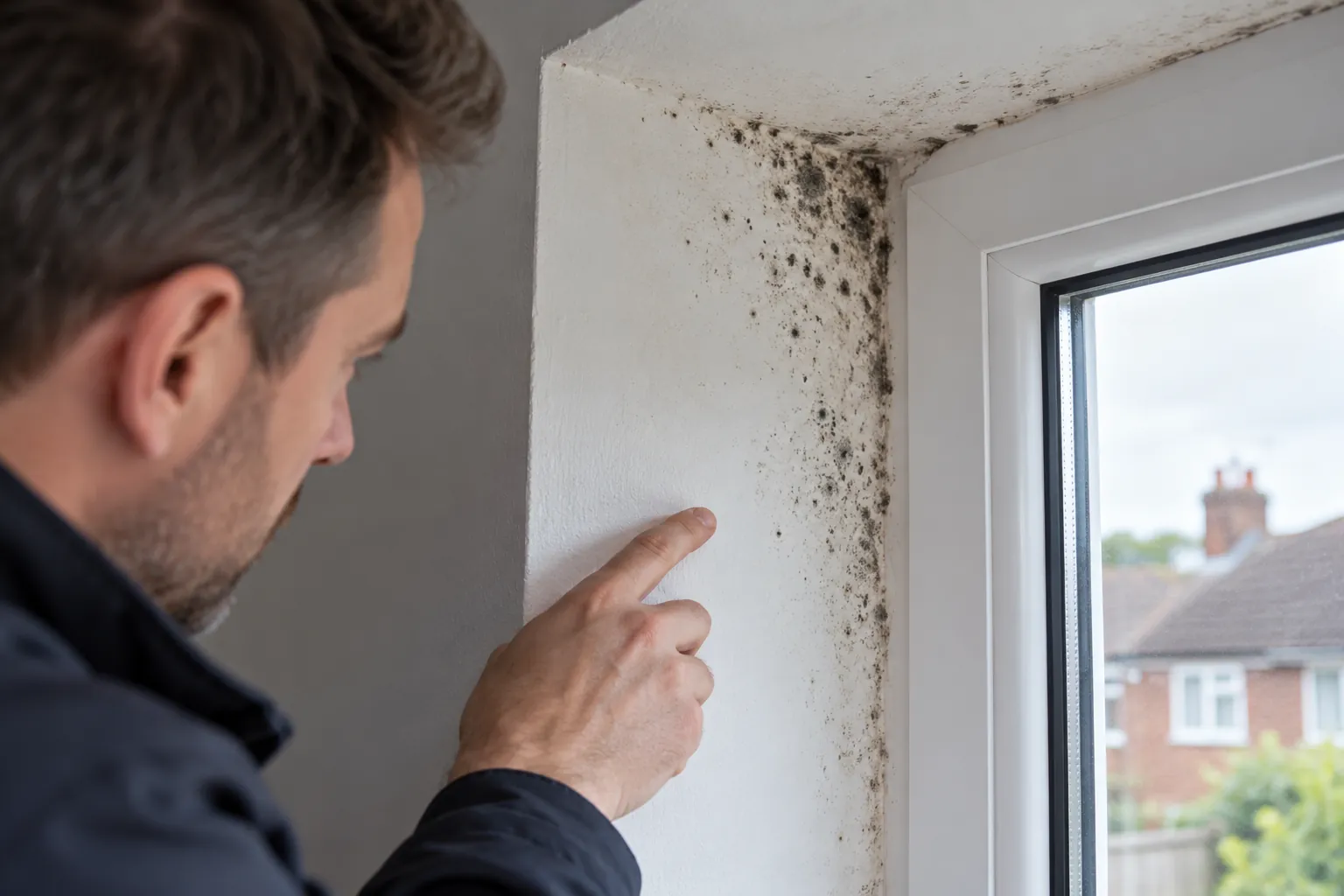

Record the visible distribution of growth
The location of growth is useful evidence. Window reveals, external corners, ceilings and wall sections behind furniture can each show a different pattern. During the visit, accessible areas are considered in relation to nearby surfaces rather than in isolation. Mention patches that have recently been cleaned or covered, because their absence on the day does not describe the earlier condition. Photographs can support that history, but they cannot replace examination of the material. The inspection should distinguish observed growth from staining or other marks where that distinction is possible, while acknowledging uncertainty. A visual inspection is not the same as laboratory identification, and no species or health diagnosis is implied by the colour of a patch.
Consider the affected materials
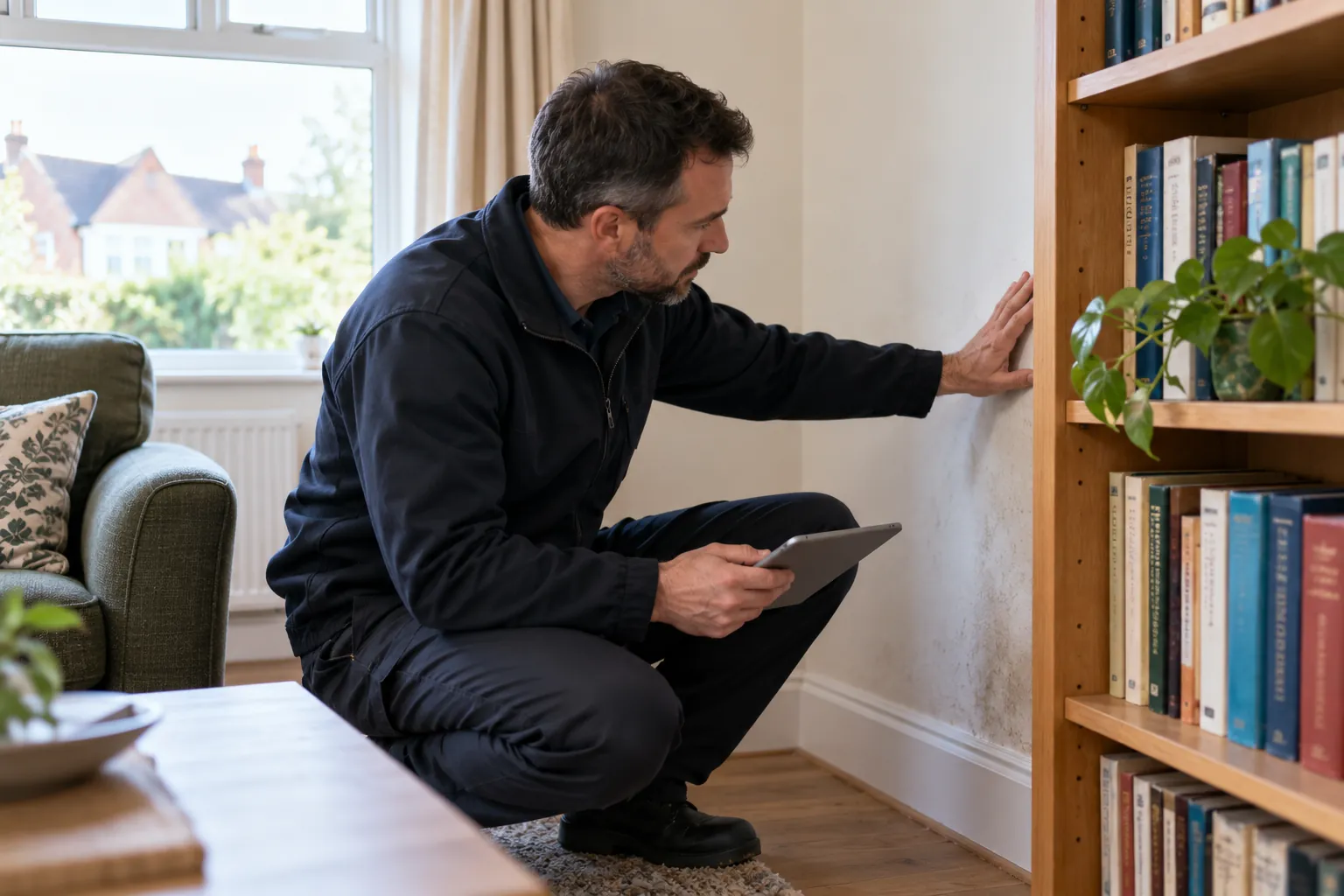
Paint, plaster, wallpaper, timber and sealants respond differently to persistent moisture. The inspection should consider whether a finish is intact, peeling, softened or otherwise deteriorated. This matters when deciding whether a surface may be suitable for treatment or needs another assessment. Tell us about recent decoration, replacement panels or concealed wall coverings, which can change what is visible. It may not be possible to establish how deeply a material is affected without further access, and that should be explained rather than inferred from appearance alone. Inspection does not authorise opening up the building. If an intrusive check could help answer a question, the purpose, permission and responsibility for making good need a separate discussion before any such work is considered.
The visit, step by step
01
Clarify the inspection question
Explain whether you need to understand visible growth, recurring patches or the suitability of a treatment proposal. Tell us if another party requires findings in a particular format. Confirm that requirement before booking, because a formal expert report is not automatically included.
02
Review the accessible distribution
Consider affected rooms and materials alongside neighbouring surfaces. Mention areas that have been cleaned or painted and provide history where available. The inspection should distinguish present observations from information supplied about past growth, without treating either as laboratory identification.
03
Consider moisture and room conditions
Review the pattern of dampness, condensation and ordinary use with appropriate checks where agreed. The evidence may point towards more than one contributing condition. Readings and visible marks need interpretation in context rather than being used as isolated proof of a particular source.
04
Identify what could not be checked
Record restrictions from furniture, sealed construction or other access limits. Explain how those limits affect the conclusions. Further access should have a purpose and appropriate permission; it is not assumed that an inspection includes opening every cavity or moving heavy fixed items.
05
Explain the findings
Separate observed growth, possible contributing factors and unresolved questions. Discuss how the agreed findings are communicated and who should receive them. Avoid treating a recommended next investigation as a confirmed diagnosis or assuming that every service recommendation is included in the present visit.
06
Choose the next service
Decide whether suitable treatment can be discussed or whether damp, condensation, ventilation or leak enquiries should come first. Each next step should answer a clear question. Where another contractor is appropriate, keep the inspection scope available so the evidence can be passed on accurately.
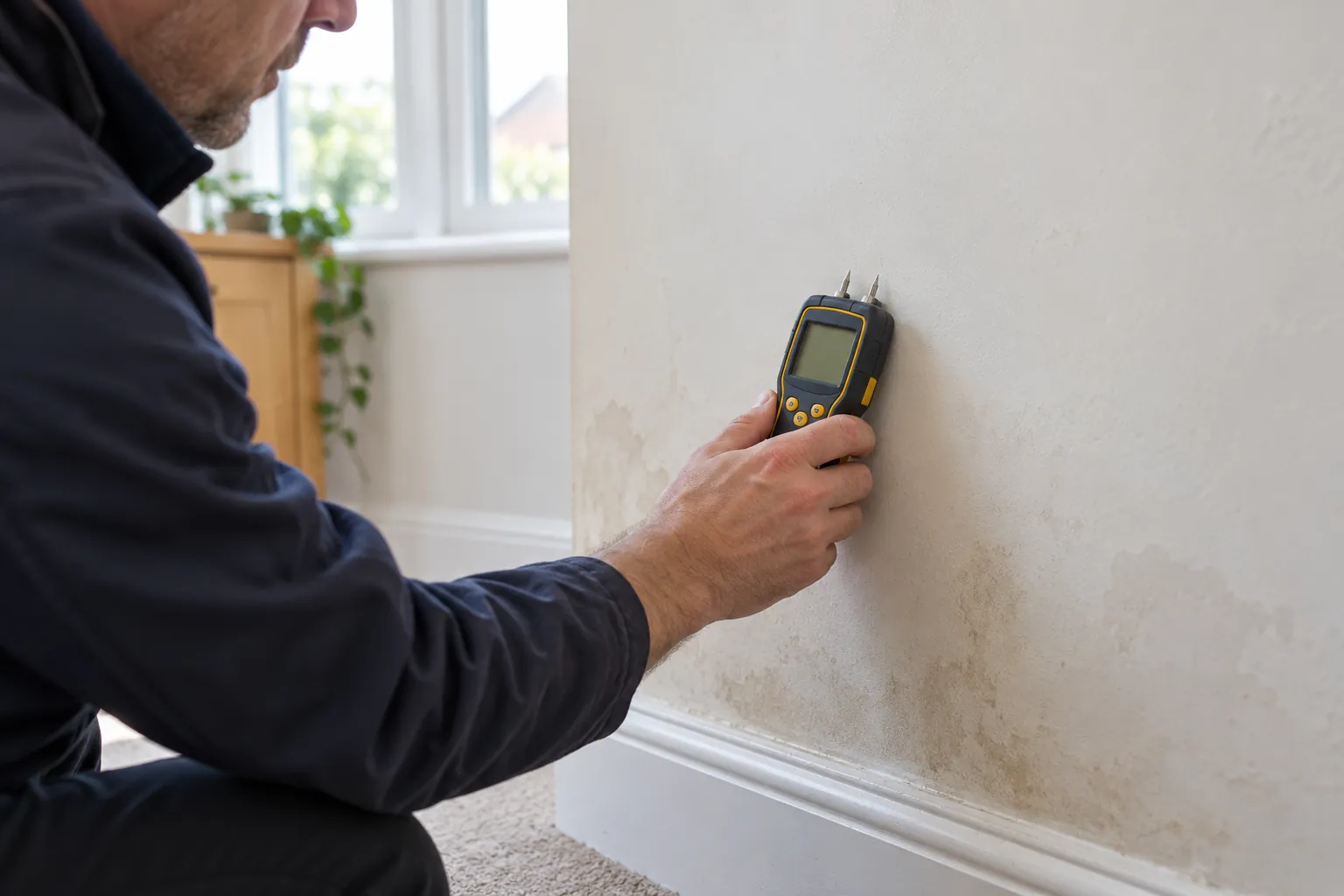
Read moisture evidence in context
Dampness, condensation and past water damage can leave overlapping signs. Moisture readings, where appropriate to the material and available scope, should be interpreted alongside the distribution of growth and the condition of the surface. A single number does not establish a leak or distinguish every form of damp. Recent cleaning, weather and the material itself can affect what is observed. Describe when the surface appears wet and whether the condition changes with rainfall, heating or room use. These details help guide the assessment, even where the visit provides only a snapshot. If the evidence remains inconclusive, the findings should identify the uncertainty and the type of further investigation that may help, rather than converting an initial suspicion into a confirmed cause.
Review the room conditions
Room use, ventilation and cold surfaces can be relevant to the pattern of mould. The discussion may include when windows become wet, how existing extractors are used and whether furniture restricts airflow near external walls. These observations are considered with the building evidence; the purpose is not to assign blame to an occupant. A leak or outside source should not be dismissed solely because condensation is also present. Explain any practical restrictions on heating or ventilation, and whether the problem is seasonal. Where a more detailed review of airflow or condensation would be useful, that can be discussed as a distinct service. Inspection advice should reflect the actual room and accessible features rather than a standard instruction that every property can follow in the same way.
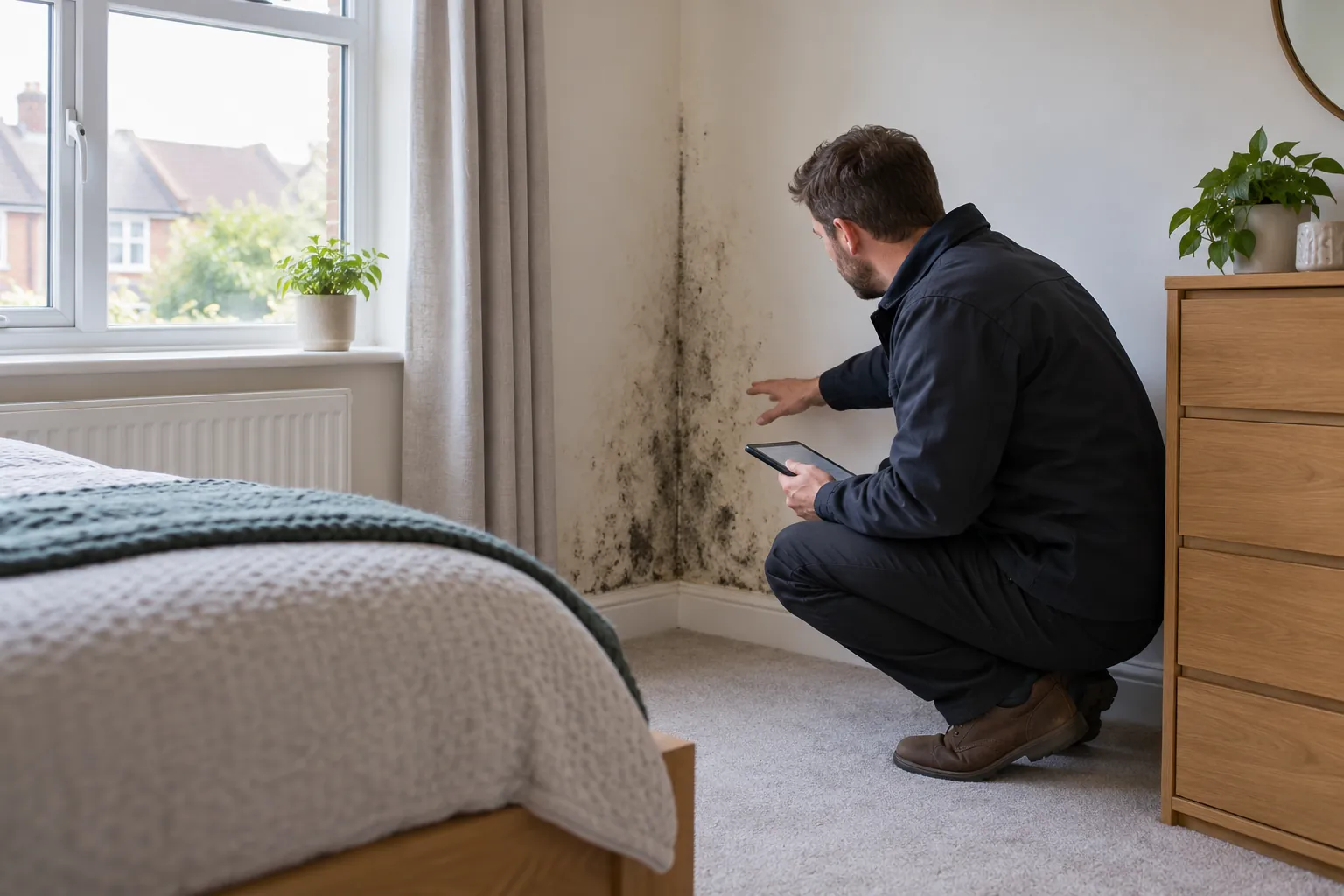
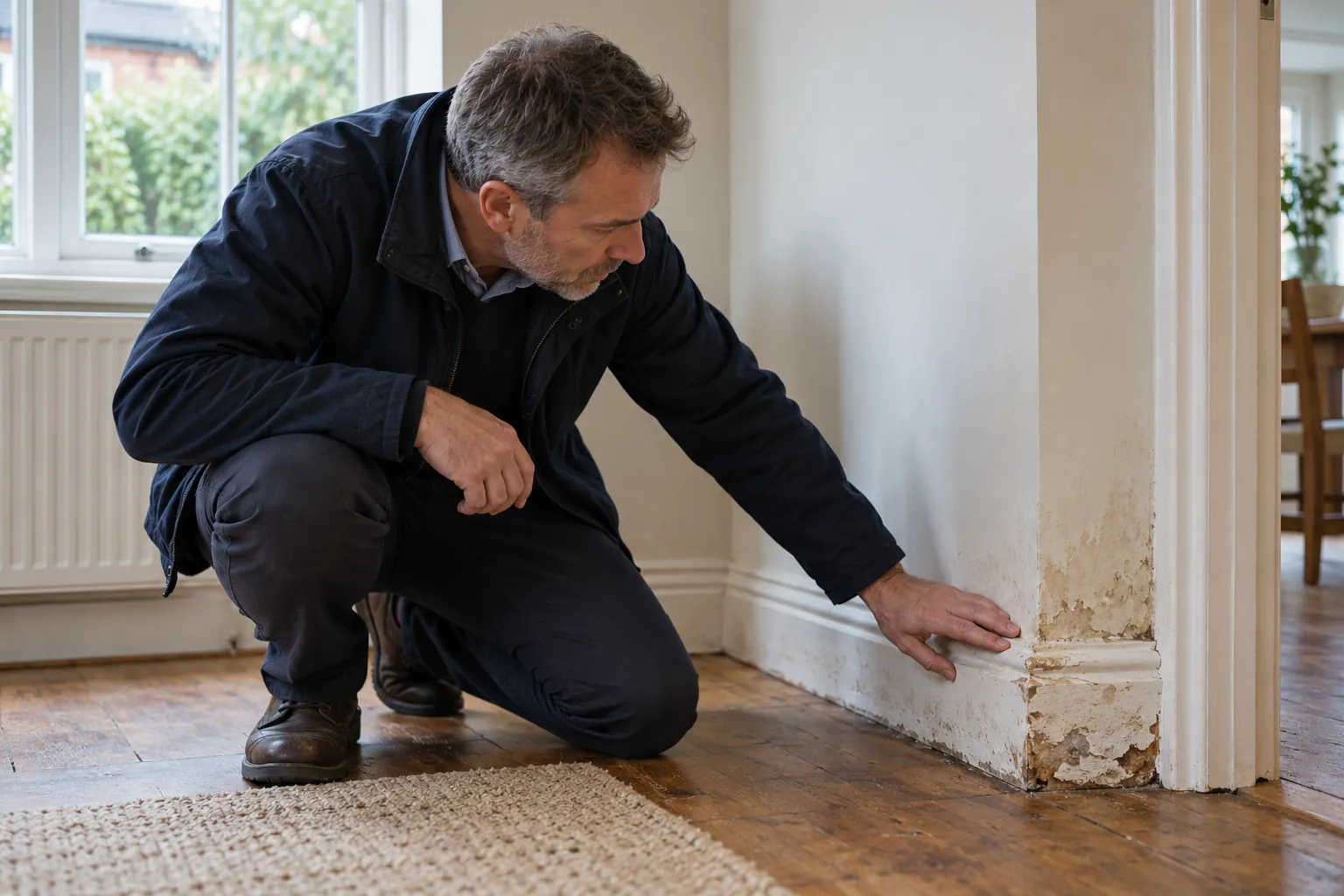
Identify access and inspection limits
A wardrobe fixed to the wall, a sealed void or a high ceiling may prevent a complete view. State these constraints before the visit where possible. The findings should make clear which areas were examined and which remain unknown. Furniture moving, panel removal, sampling and specialist access are not assumed parts of a visual inspection. If another person controls access to a room or neighbouring property, arrange the necessary permission separately. A limitation is important information: it affects how confidently the findings can be applied to concealed areas. Avoid interpreting a clear accessible wall as evidence that the entire wall construction is unaffected. Further access can be recommended where it would materially change the decision, with the proposed purpose explained before additional work is arranged.
Turn observations into the next decision
The useful outcome is a clear distinction between what was seen, what may be contributing and what should happen next. Some areas may be suitable for a treatment proposal. Others may need damp, condensation, ventilation or leak investigation first. Ask which action is a recommendation and which is included in the current scope. If material damage is visible, replacement or repair may need a separate contractor. Where several possible sources remain, prioritising the next check can be more useful than presenting a long unranked list. Discuss how the findings will be communicated and who needs them. The inspection should help you make a decision without implying that every cause has been proven or that every recommended task will be carried out by the same provider.
Prepare useful information before the visit
Keep a short record of when the growth appeared, where it has spread and any action already taken. Note known leaks or rainwater problems, but distinguish confirmed events from guesses. If earlier photographs exist, keep the original context and dates where available. Clear small belongings from accessible inspection areas only after discussing preparation, and do not disturb suspect building materials to expose hidden growth yourself. Tell us about any relevant access needs and who can authorise additional investigation. For a Stanmore HA7 property with several affected rooms, a simple room list helps keep the enquiry accurate. You do not need to diagnose the cause or estimate the treatment method before contacting us; explaining the visible problem is enough to begin the discussion.
Evidence and the next decision
| Visible sign or situation | Evidence to consider | Useful next check |
|---|---|---|
| Window reveal | Visible spotting and damp surface | Review condensation and local water signs |
| External corner | Growth distribution and surface condition | Consider cold surfaces and airflow |
| Covered wall | Restricted access behind furniture | Record the uninspected area |
| Recently redecorated patch | Earlier photographs and history | Explain limits of current appearance |
Scope and practical limits
| Part of the assessment | Limitation to understand | Next action |
|---|---|---|
| Visual inspection | Accessible evidence on the day | Further access may be needed |
| Species identification | Colour is not laboratory identification | Discuss testing separately if relevant |
| Health concerns | Property observations are not medical advice | Seek appropriate healthcare advice |
| Written findings | Format depends on the agreed visit | Confirm requirements before booking |
Questions about mould inspection
Will an inspection identify the type of mould?
A visual inspection does not automatically identify a species. Dark colour alone is not a reliable classification. If a particular testing question needs answering, discuss the reason and proposed scope before booking. Do not assume that sampling or laboratory analysis is included in the standard visit.
Can cleaned areas still be assessed?
Yes, the surrounding condition and the history may still be relevant, but cleaning can remove visible evidence. Explain what was used and when. Earlier photographs can help show the former distribution. The findings should distinguish what was observed during the visit from information supplied about the past.
Is the visit a building survey?
A mould inspection has a defined focus on affected areas and related evidence. It should not be treated as a complete building survey or a guarantee that every defect has been found. Confirm any additional questions before booking so that suitability and limitations can be discussed.
Can you inspect a tenanted home?
Discuss who is arranging the visit, who can authorise access and who needs the findings. Occupiers can provide useful history, while instructions for further work may require the landlord or agent. The inspection describes property observations rather than deciding legal responsibility for a housing dispute.
What follows an inconclusive inspection?
The findings should explain what remains uncertain and why. A further damp, condensation or leak investigation may be more appropriate than immediate treatment. Ask which next check would help distinguish the remaining possibilities and whether another specialist or additional access is needed before it can proceed.
Discuss the affected areas
Call with the property location, the affected rooms and a brief history. We can discuss the proposed scope and what information is needed before a visit is agreed.