
Home / Condensation Investigation
STANMORE HA7 / PROPERTY ASSESSMENT
Condensation Investigation in Stanmore
Understand the pattern of recurring window moisture, wet cold surfaces and associated mould. The investigation brings together room use, moisture observations and building evidence before practical next steps are discussed.
Quick answers about the service
What information helps investigate condensation?
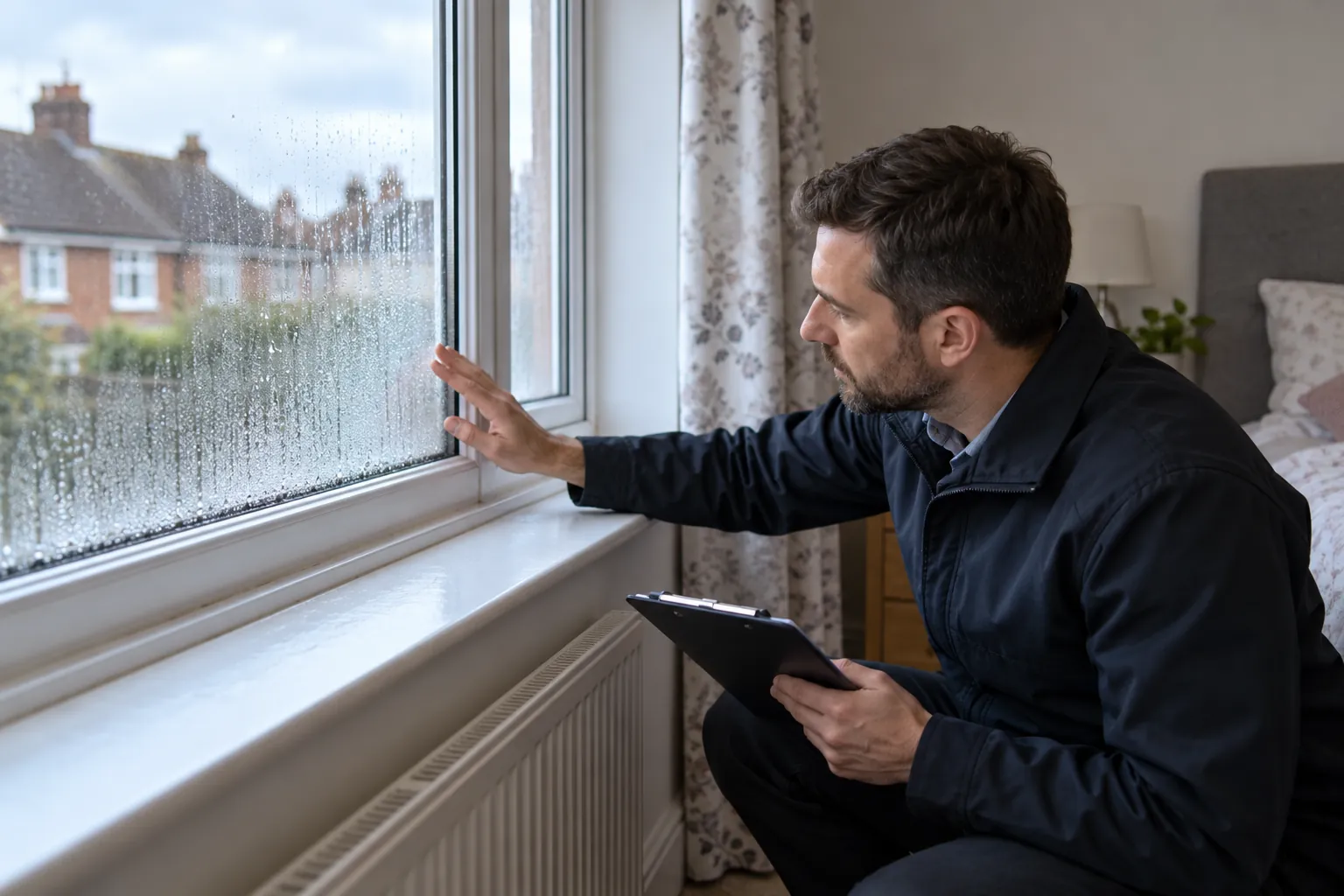
Note which windows or surfaces become wet, the time of day and whether the pattern changes with weather or room use. Explain heating and ventilation arrangements and any known leaks. These details help distinguish a repeated condensation pattern from other moisture concerns, although observations and suitable checks are still needed.
Is condensation always caused by poor ventilation?
Ventilation can matter, but moisture generation, surface temperature, heating patterns and building conditions also affect the picture. A leak or outside water entry may coexist with condensation. The investigation should consider these factors together rather than assigning a cause from wet glass alone or assuming that one household action explains every room.
The visit, step by step
01
Describe the daily pattern
List wet windows, cold wall patches and the time they appear. Explain seasonal changes and the normal room routine. Earlier photographs can help if conditions are different at the visit, but a picture without timing may not describe the recurring pattern.
02
Review moisture-producing activities
Consider bathing, cooking, indoor drying and room occupancy alongside the building conditions. This information gives context rather than assigns blame. Explain practical constraints so any advice can relate to ordinary life in the property instead of an artificial routine created for an inspection.
03
Examine affected surfaces
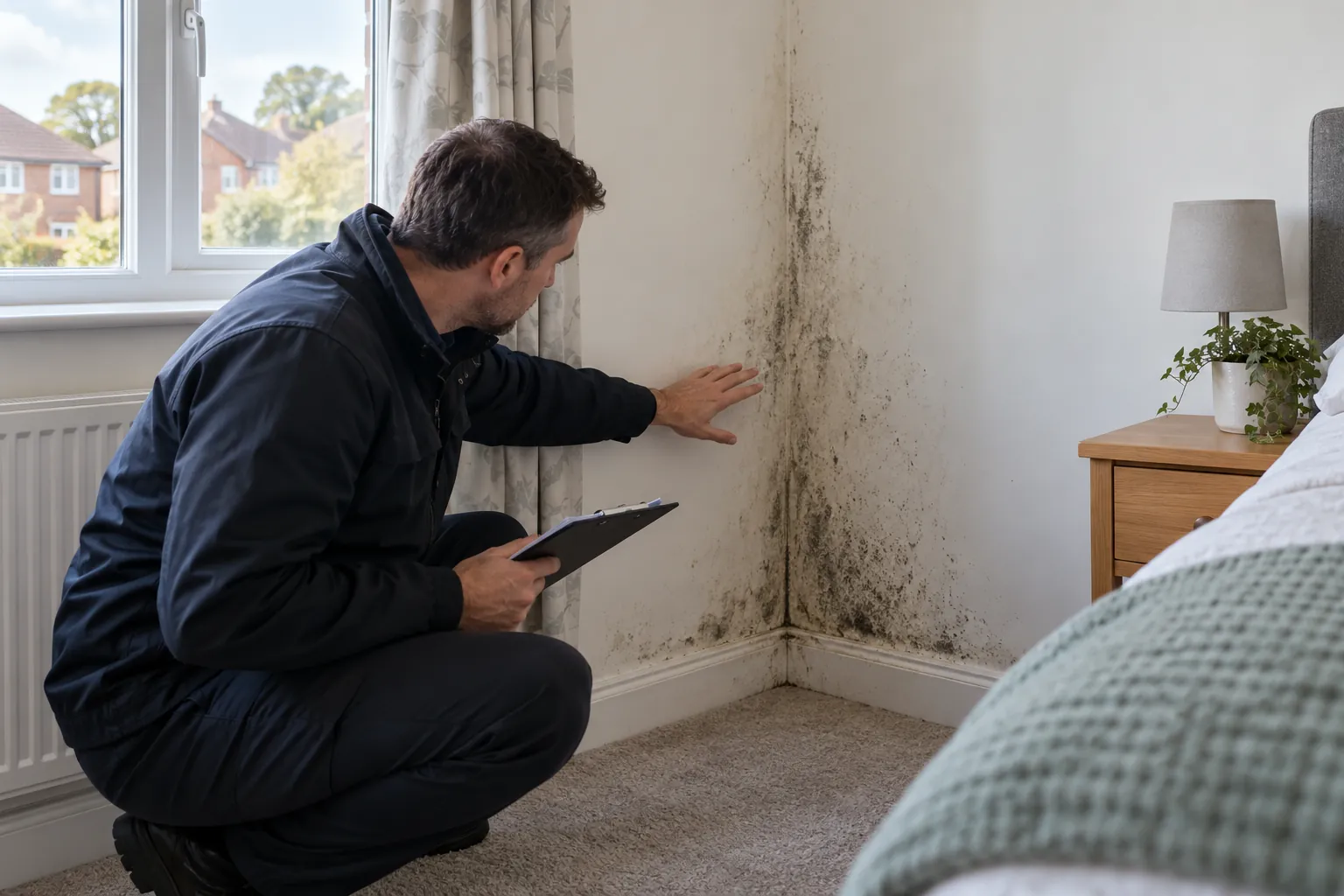
Review where moisture and growth occur in relation to windows, corners, heating and furniture. Accessible observations can suggest useful questions but do not establish concealed construction. Recent changes to windows or finishes should be included when explaining the history of the problem.
04
Interpret available environmental evidence
Any readings need their time, location and room conditions understood. A short visit is not the same as a record across a day. If further observation is recommended, ask what question it should answer and how that information will guide the next action.
05
Check for another moisture explanation
Consider rain-related changes, localised stains and known water routes. Condensation does not rule out a separate leak or water entry. Distinguish the areas and evidence rather than forcing one explanation onto the whole property when different signs point in different directions.
06
Agree practical next steps
Discuss use of existing ventilation, airflow and any need for a more detailed assessment. Existing mould may need separate removal. Keep a record of agreed changes and the resulting pattern, with unresolved questions directed to the relevant service or suitable contractor.
Map when and where moisture appears
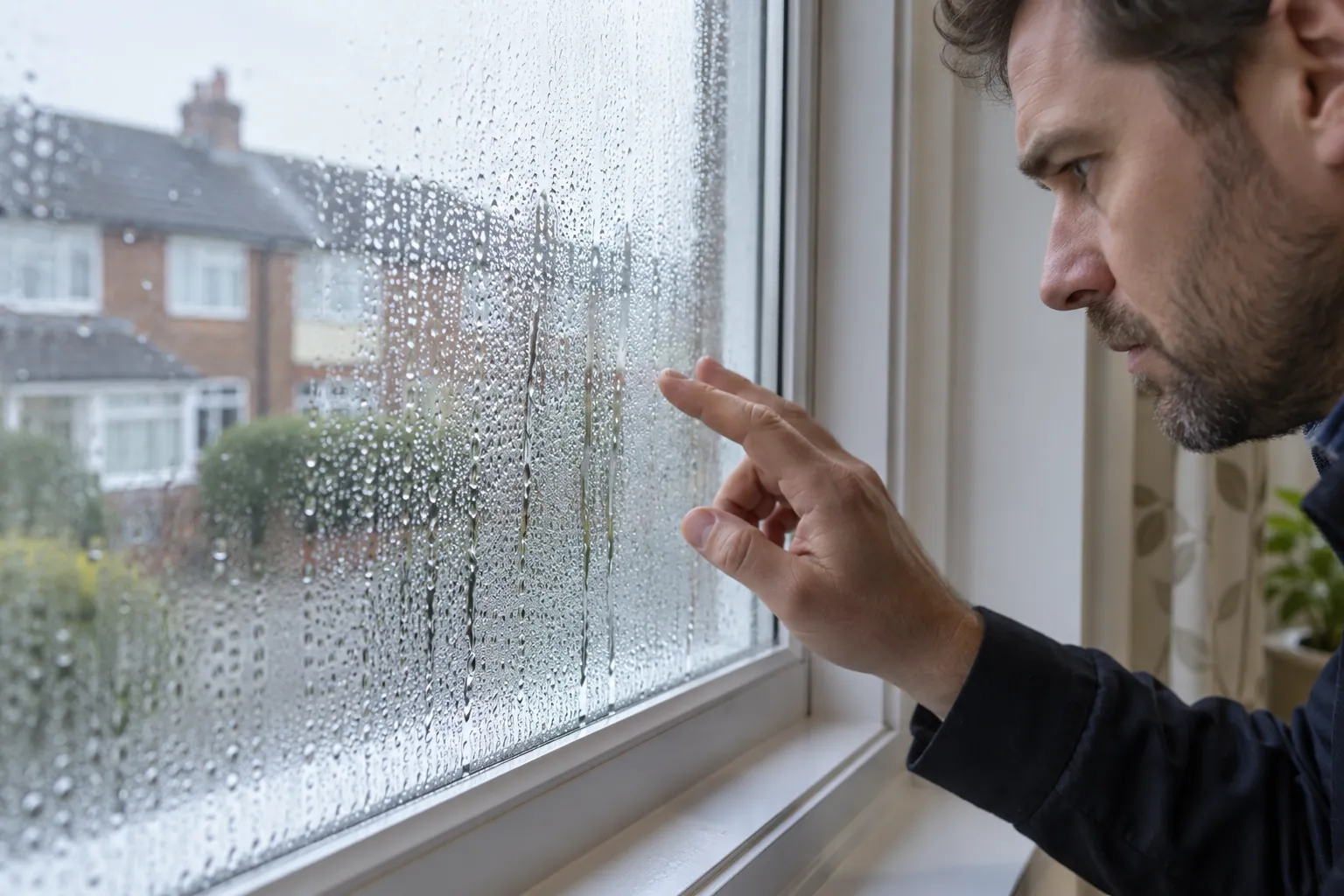
Begin with the daily pattern. Explain whether glass is wet in the morning, surfaces become damp after cooking or a wall remains affected throughout the day. Record the rooms separately and include the position of the window or external wall. If the pattern is seasonal, describe the difference between colder and warmer periods. Photographs taken before wiping the glass can show the distribution, while a brief note of timing adds context that an image cannot provide. You do not need a technical diagnosis before calling. The aim is to give the investigation a clear starting point and avoid treating a single visit as a complete picture of how the property behaves at all times.
Review indoor moisture without assigning blame
Bathing, cooking and drying clothes can add moisture indoors, but the resulting conditions also depend on the home and how moisture can leave it. Describe ordinary room use honestly, including any practical constraints. The purpose is to understand the situation, not to attribute fault. A kitchen and a bedroom may show different patterns, and changes in occupancy can alter what is observed. Tell us about rooms that are rarely used or kept closed, because their conditions may differ from the rest of the home. This discussion should sit alongside inspection of the affected surfaces and consideration of other sources. A familiar household activity does not by itself prove that condensation is the only explanation for a persistent damp patch.
Consider cold surfaces and the building layout
Moisture may be most visible on colder glass, window reveals or external corners. Furniture placement and enclosed areas can also affect local airflow. The investigation considers the pattern in relation to the layout and accessible surfaces, while recognising that concealed construction may remain unknown. Explain recent changes such as replacement windows, new wall coverings or furniture moved against an external wall. These details can help frame the assessment without establishing a defect automatically. A cold-looking location is not proof of the wall construction or insulation condition. If a question depends on specialist building assessment, that should be distinguished from the condensation investigation. Recommendations should identify what has been observed and where an explanation remains provisional.
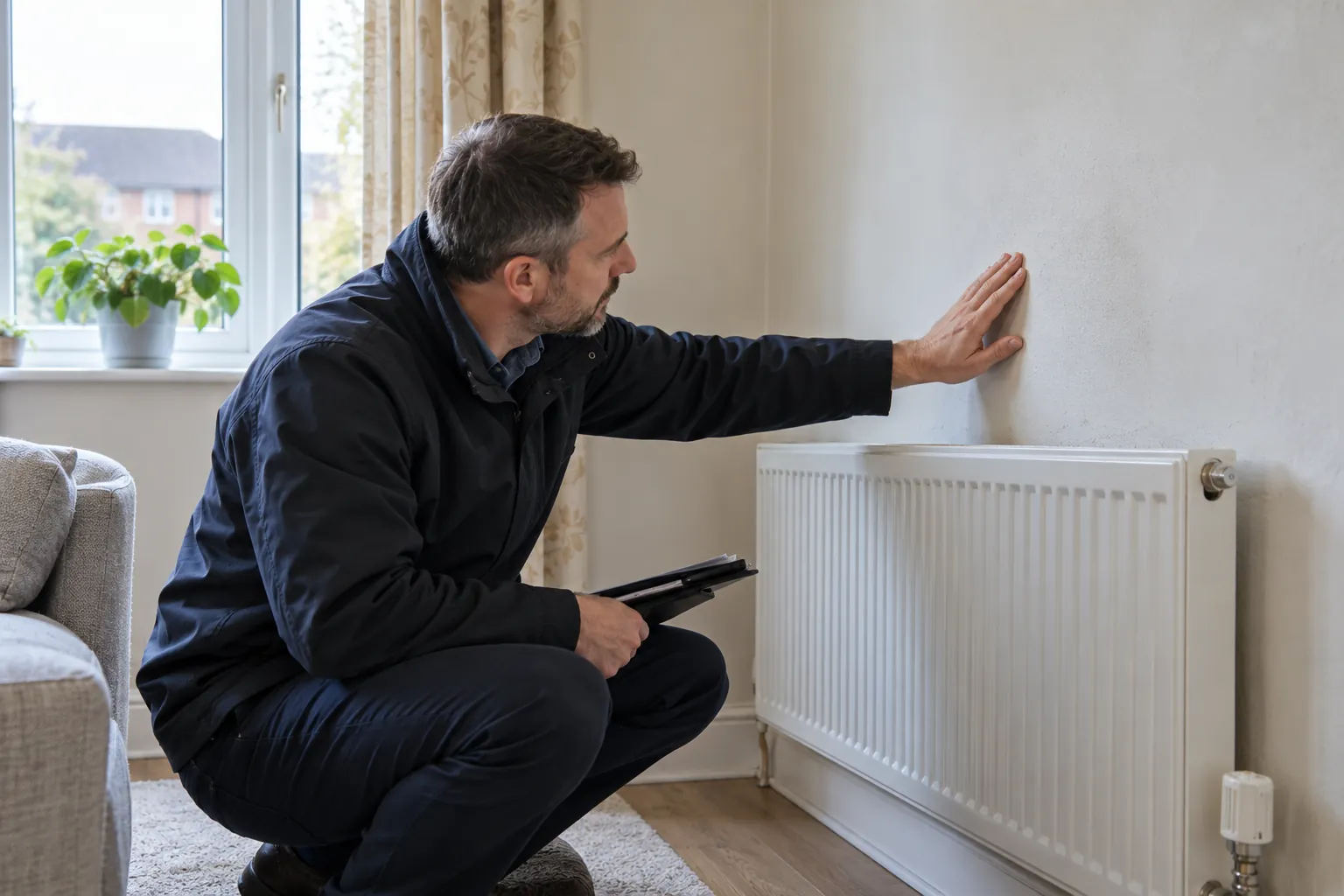
Discuss heating patterns in practical terms
Rooms heated differently or intermittently can develop different surface conditions. Describe how the home is normally used rather than altering it for the visit. Mention rooms that remain cooler and whether the issue changes after heating is switched on or off. This information helps interpret moisture observations, but advice should take account of the property and the occupant’s circumstances. The investigation is not an energy assessment or a prescription for a particular heating system. If a separate building or heating question arises, it should be directed to an appropriate specialist. Practical suggestions need to be clear about their purpose and limits; they should not promise that changing one setting will prevent all condensation or resolve a concealed water problem.
Evidence and the next decision
| Visible sign or situation | Evidence to consider | Useful next check |
|---|---|---|
| Morning window droplets | Repeated overnight moisture pattern | Record rooms, timing and surface distribution |
| Wet external corner | Cool surface and local conditions | Review wall pattern and furniture position |
| Moisture after bathing | Room moisture and extraction context | Consider a ventilation assessment |
| Rain-related damp mark | Possible separate water source | Discuss damp or external investigation |
Scope and practical limits
| Part of the assessment | Limitation to understand | Next action |
|---|---|---|
| Short visit | Conditions vary through the day | History or further observation may help |
| Household device record | Location and timing affect readings | Use it as background evidence |
| Fan operation | Sound does not prove effective airflow | Discuss a defined ventilation assessment |
| Building construction | Concealed details remain uncertain | Separate specialist checks may be needed |
Examine the available ventilation context
Existing extractors, background vents and routes through which moisture can leave a room may be relevant. Tell us how they are used and whether a fan appears to run normally, but do not assume that noise alone demonstrates effective extraction. The initial investigation can identify whether a more detailed condensation and ventilation assessment is appropriate. Electrical testing, duct commissioning or installation work is not implied. Obstructed or inaccessible routes may require another check before advice can be specific. Avoid blocking a vent to change the appearance of a problem before the visit. The findings should connect the observations to the next useful action rather than automatically recommend a new fan without understanding its route, suitability and the surrounding conditions.
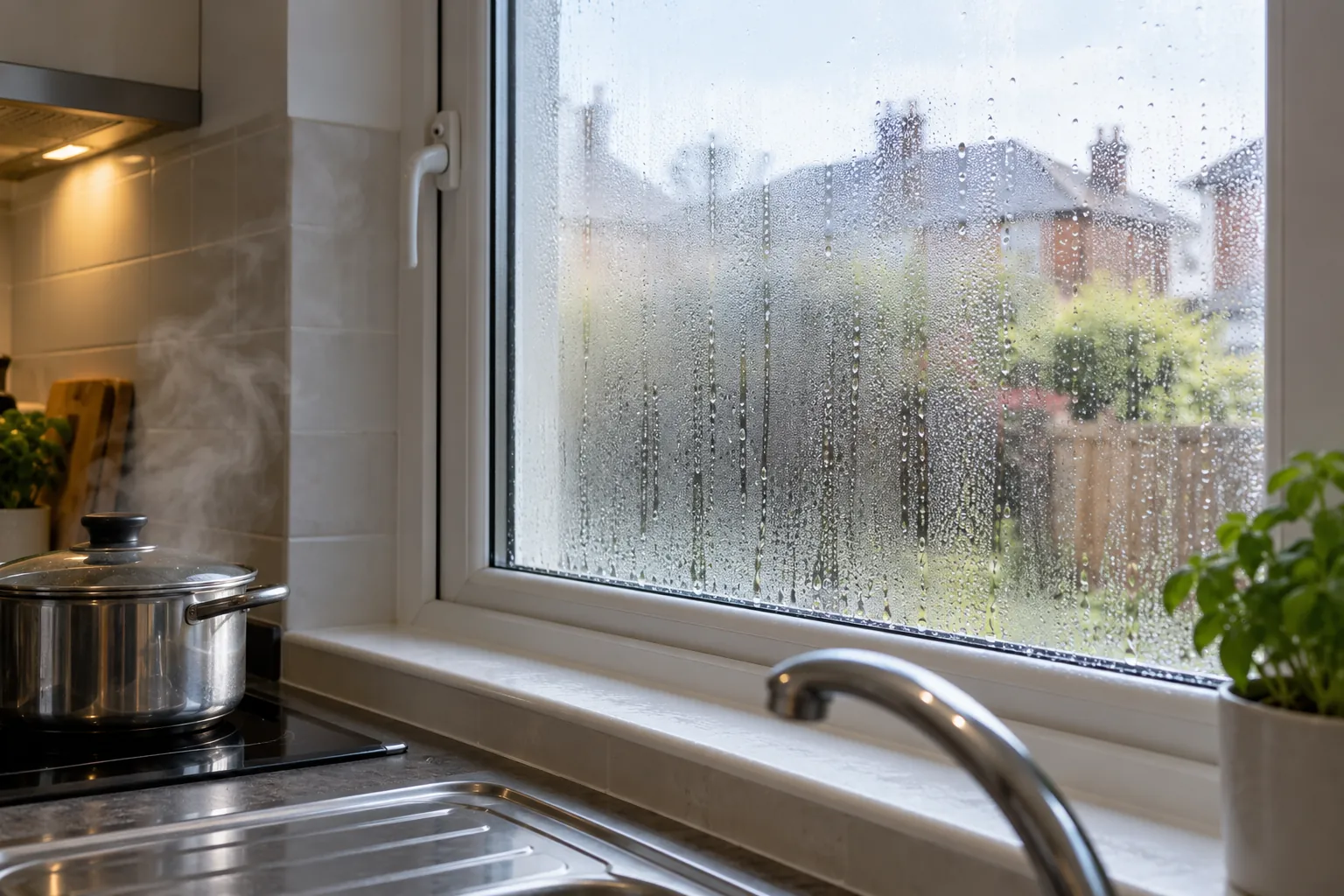
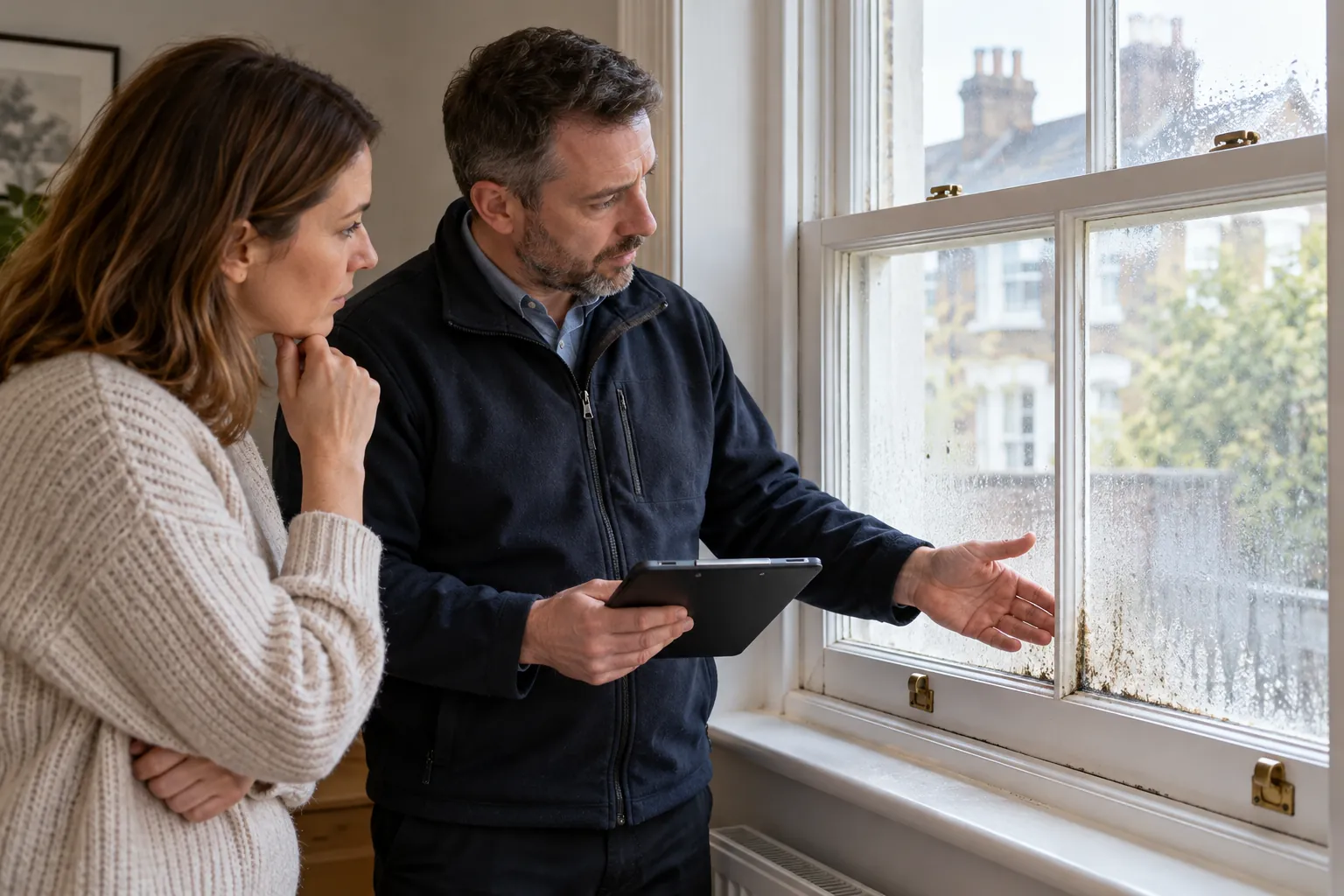
Use readings with an understanding of timing
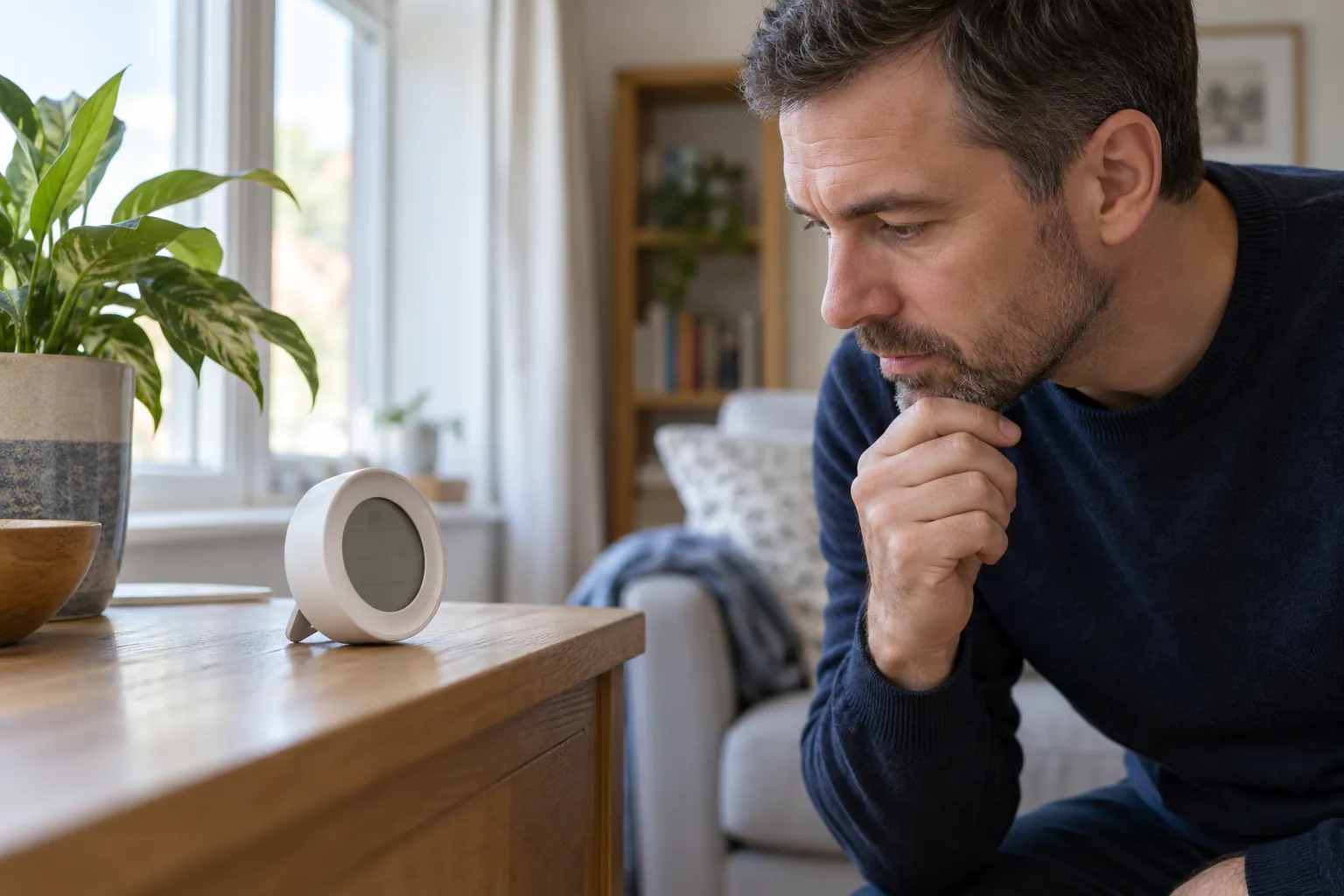
Where environmental observations or measurements form part of the agreed scope, their timing matters. A reading during a short visit may differ from conditions overnight or immediately after bathing. The investigation should explain what the available information supports and whether further observation would help. Do not treat a single humidity figure as a full account of the room, or compare measurements taken under very different circumstances without context. If you already have a record from a household device, explain when and where it was taken. It can add background but is not a substitute for understanding the material and surface pattern. Any recommendation for further monitoring should have a defined question and an explanation of how the result would influence the next step.
Keep leaks and water ingress in the picture
A patch that worsens after rain, localised dampness near pipework or staining below a bathroom can need a different investigation. Condensation on glass does not rule those possibilities out. Describe any known water events and previous repairs, even if they occurred elsewhere in the home. Where several signs coexist, the findings should distinguish the areas and explain which source is suspected for each. A recommendation for damp inspection or hidden leak detection is not a confirmed repair diagnosis. If further access or another specialist is needed, that requirement should be made explicit. This helps avoid spending time on ventilation changes while an unresolved source continues to wet the material behind the affected finish.
Translate the findings into manageable actions
The outcome should identify practical measures suited to the observed pattern and any remaining questions. Advice may concern how existing ventilation is used, airflow around furniture or how moisture-producing activities are managed. Some matters may need a dedicated ventilation assessment or a separate building investigation. Ask which actions you can carry out and which require another contractor. If mould has developed, its treatment can be considered as a separate scope rather than assuming that addressing condensation removes existing growth. Keep a record of changes so that further enquiries can distinguish what has been tried from what remains outstanding. For a Stanmore HA7 home, the useful result is a clear sequence of decisions, with the limits of the investigation understood.
Questions about condensation investigation
Should I wipe the windows before the visit?
Tell us the normal pattern and discuss preparation when booking. Photographs taken before wiping can help record the distribution. There is no need to change the household routine to produce a particular result; accurate information about ordinary conditions is more useful than an artificially dry or wet room.
Can a bedroom be affected when the bathroom is clear?
Yes. Rooms differ in use, surface temperature and airflow. A clear bathroom does not establish that a bedroom has the same conditions. Describe each room separately so that the investigation can consider its position and pattern rather than applying one explanation to the whole property.
Does condensation mean I need new windows?
Not automatically. Wet glass is a sign to investigate in context, not a specification for replacement. The surrounding surfaces, ventilation and moisture pattern matter. Any recommendation for window or building work should follow appropriate assessment and a separate scope with the relevant contractor.
Can you assess a property with mould as well?
Explain both the condensation and the growth when enquiring. They can be considered together, but investigation and mould treatment remain different tasks. The findings can help determine whether removal is appropriate and what moisture-related actions may be needed alongside it.
What if the problem is absent on the day?
Describe the usual timing and provide earlier photographs or notes if available. Conditions during one visit may not reproduce the recurring pattern. The assessment should identify that limitation and explain whether further observation, a different check or another investigation could help answer the outstanding question.
Discuss the affected areas
Call with the property location, the affected rooms and a brief history. We can discuss the proposed scope and what information is needed before a visit is agreed.