
Home / Hidden Leak Detection
STANMORE HA7 / PROPERTY ASSESSMENT
Hidden Leak Detection in Stanmore
Investigate signs that may indicate a concealed source of water, using the accessible evidence to guide the next check. The scope distinguishes moisture investigation from opening up the building, confirming a plumbing defect and carrying out repairs.
Quick answers about the service
Can damp marks reveal a hidden leak?
A local damp patch, staining below a bathroom or moisture near boxed-in services can justify further investigation. These signs do not prove the exact source. Water may travel before it becomes visible, and condensation or external water can produce overlapping evidence. The investigation should explain what is observed and what remains uncertain.
Will the source always be located without opening up?
No such outcome can be promised. Appropriate non-destructive observations and checks can guide the investigation, but concealed routes, access limits and intermittent conditions may prevent confirmation. If further access or specialist plumbing investigation is needed, its purpose and scope should be discussed separately before intrusive work or repairs are arranged.
The visit, step by step
01
Gather timing and repair history
Describe when the patch appears, nearby facilities and previous water events. Distinguish confirmed leaks from suspicions. If active water or an immediate safety issue is present, use the appropriate qualified service rather than relying on a routine investigation to manage the incident.
02
Review accessible routes and surfaces
Consider affected materials and their position relative to known services. Water can travel before becoming visible, so the nearest fitting is not necessarily the source. Explain boxing, fixed units and other access limits that prevent a view of concealed routes.
03
Build the moisture evidence
Appropriate checks may help compare affected and neighbouring areas. Interpretation depends on material and circumstances. A pattern can guide the next question but does not guarantee exact leak location, and it should not be presented as a direct image of hidden pipework.
04
Consider alternatives and intermittent behaviour
Review whether rainfall, condensation or past damage may explain some evidence. The condition may be absent during the visit. Any further monitoring or specialist check should have a clear purpose, without deliberately creating a leak or disturbing services to reproduce a symptom.
05
Define any specialist or intrusive stage
If further access or plumbing investigation is needed, clarify permission, scope and reinstatement. The assessment itself does not authorise opening walls or floors. A suspected route should be distinguished from a confirmed defective component before repair work is agreed.
06
Connect repair with material follow-up
Keep the findings available for the appropriate contractor. After source repair, affected materials may still need reassessment, mould treatment or decoration. Record changes so continuing moisture can be distinguished from remaining stains and the next enquiry can use the repair history.
Explain the pattern before naming a leak
Tell us where the moisture appears, when it began and whether it changes with use of a bathroom, kitchen or heating system. Describe visible staining, deterioration or a damp smell without treating these as proof of a particular pipe defect. The location where water becomes visible may be some distance from its origin. Mention known leaks, previous repairs and any recent changes to fittings. A brief chronology helps guide the enquiry, especially if the problem is intermittent. If active water is escaping or there is an immediate safety concern, contact the appropriate qualified service promptly. A routine investigation is not a substitute for managing an active incident or making unsafe electrical equipment safe.
Review accessible surfaces and nearby routes
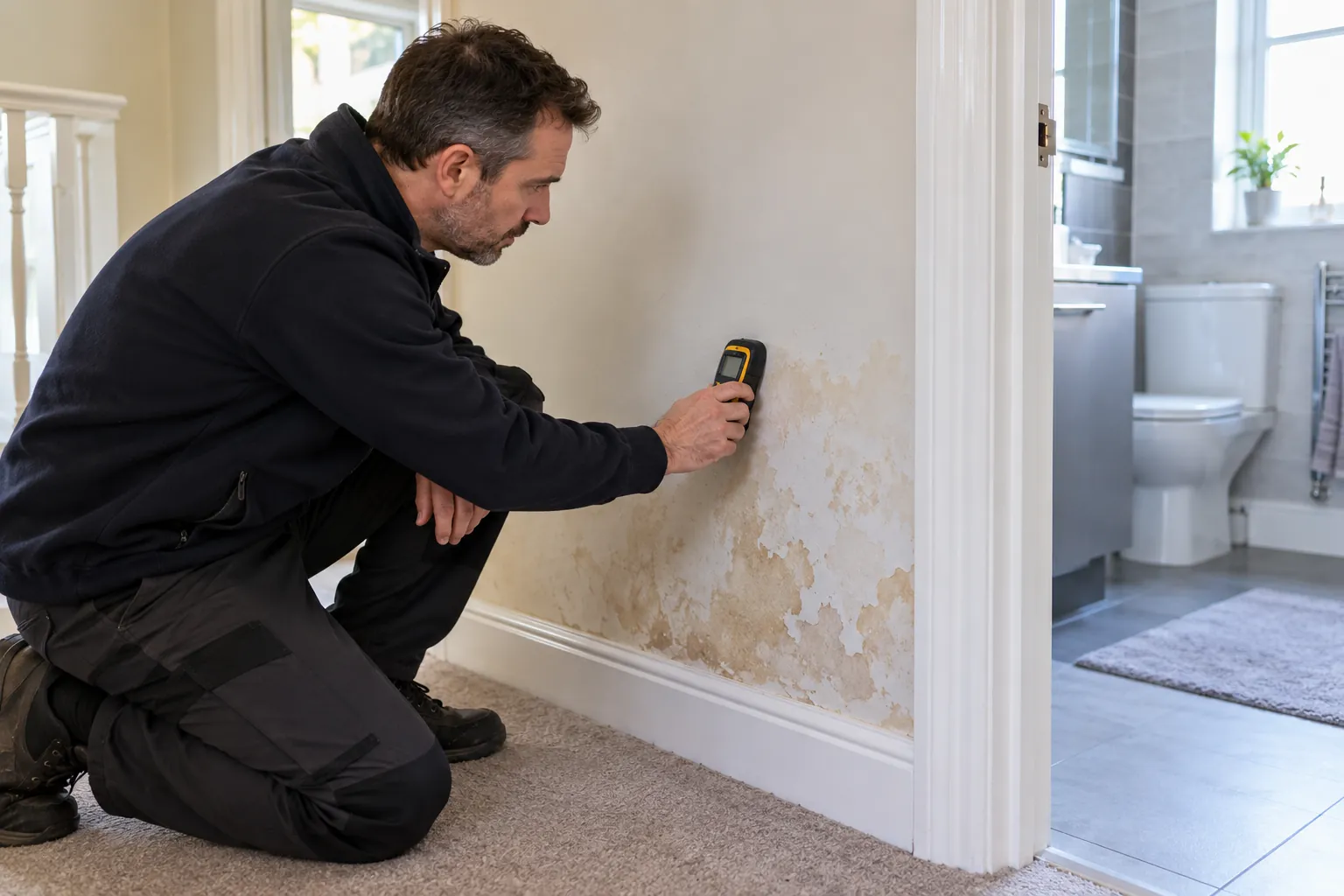
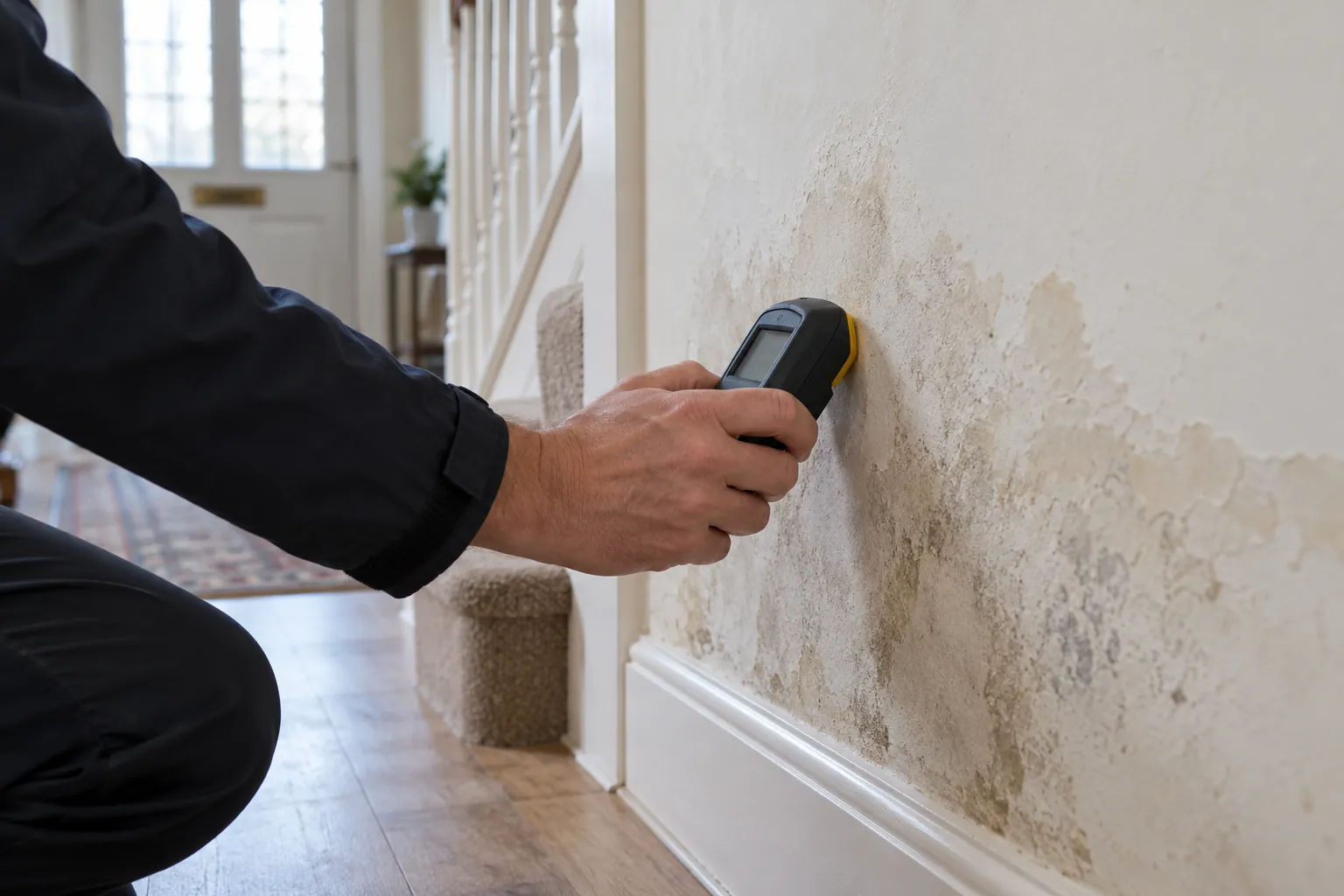
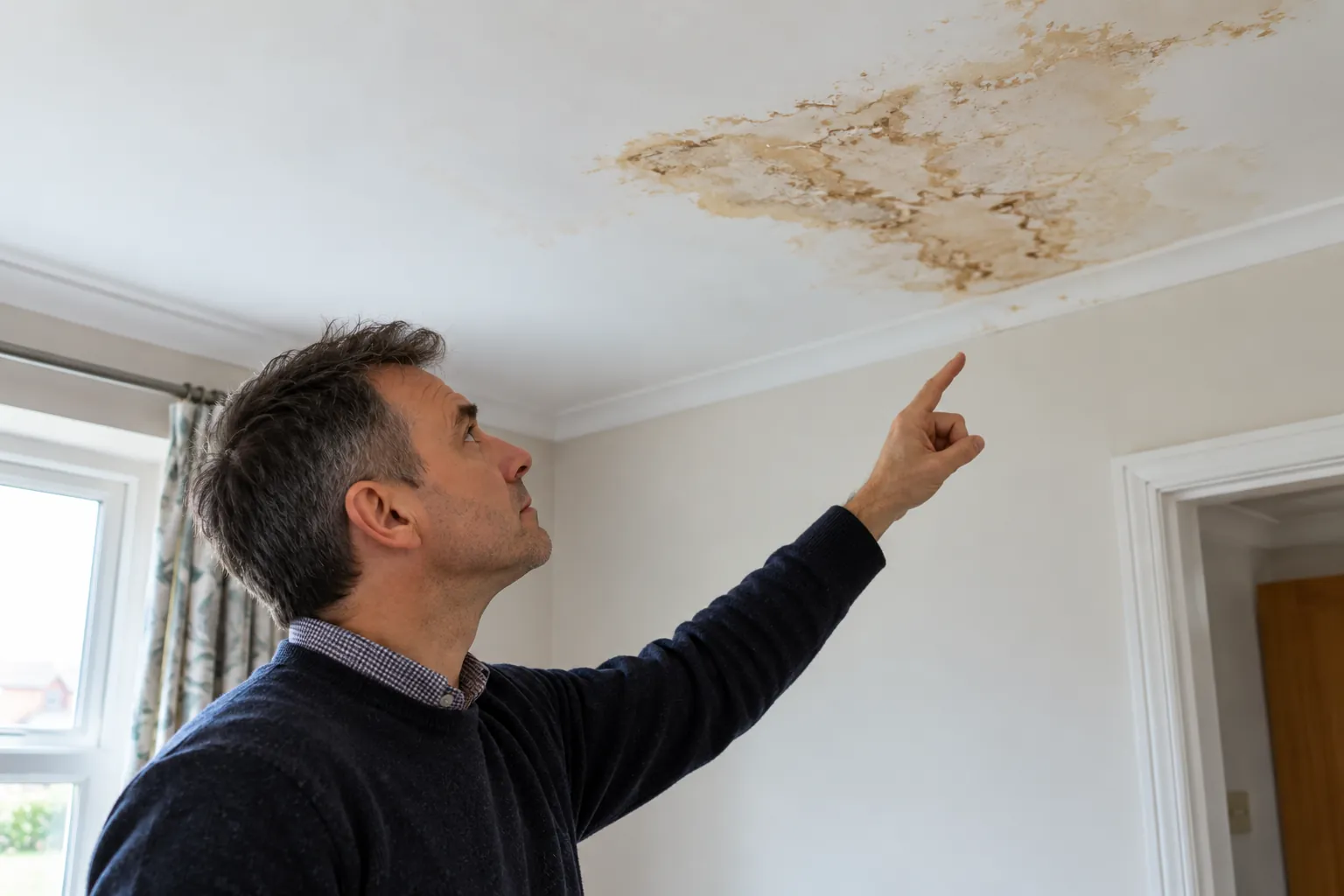
The visit can consider affected walls, ceilings, floors and accessible service areas within the agreed scope. Their position in relation to bathrooms, kitchens and known pipe routes can help frame possible explanations. Tell us about boxed-in sections, fixed cabinetry or areas that cannot be reached. An inspection does not imply that panels will be removed or appliances moved. Where the source might be concealed, the findings should distinguish an accessible observation from an inferred route. Previous plans or reliable information about the building can help, but undocumented assumptions should remain clearly labelled. The objective is to narrow the next useful check, not to identify a specific component simply because it is the nearest visible fitting.
Build a moisture pattern rather than rely on one point
Appropriate surface checks can help compare affected and surrounding areas, depending on the material and agreed investigation. A pattern can be more informative than a single isolated indication. However, readings do not show the water route directly, and different materials may respond differently. Explain whether surfaces have recently been cleaned, covered or redecorated, because that can influence interpretation. Where moisture mapping is appropriate, ask how the observations will be recorded and what conclusions they can support. A marked boundary is not necessarily the edge of all concealed damage. Further access or another specialist may still be needed to establish where water is entering and how the affected construction should be dealt with.
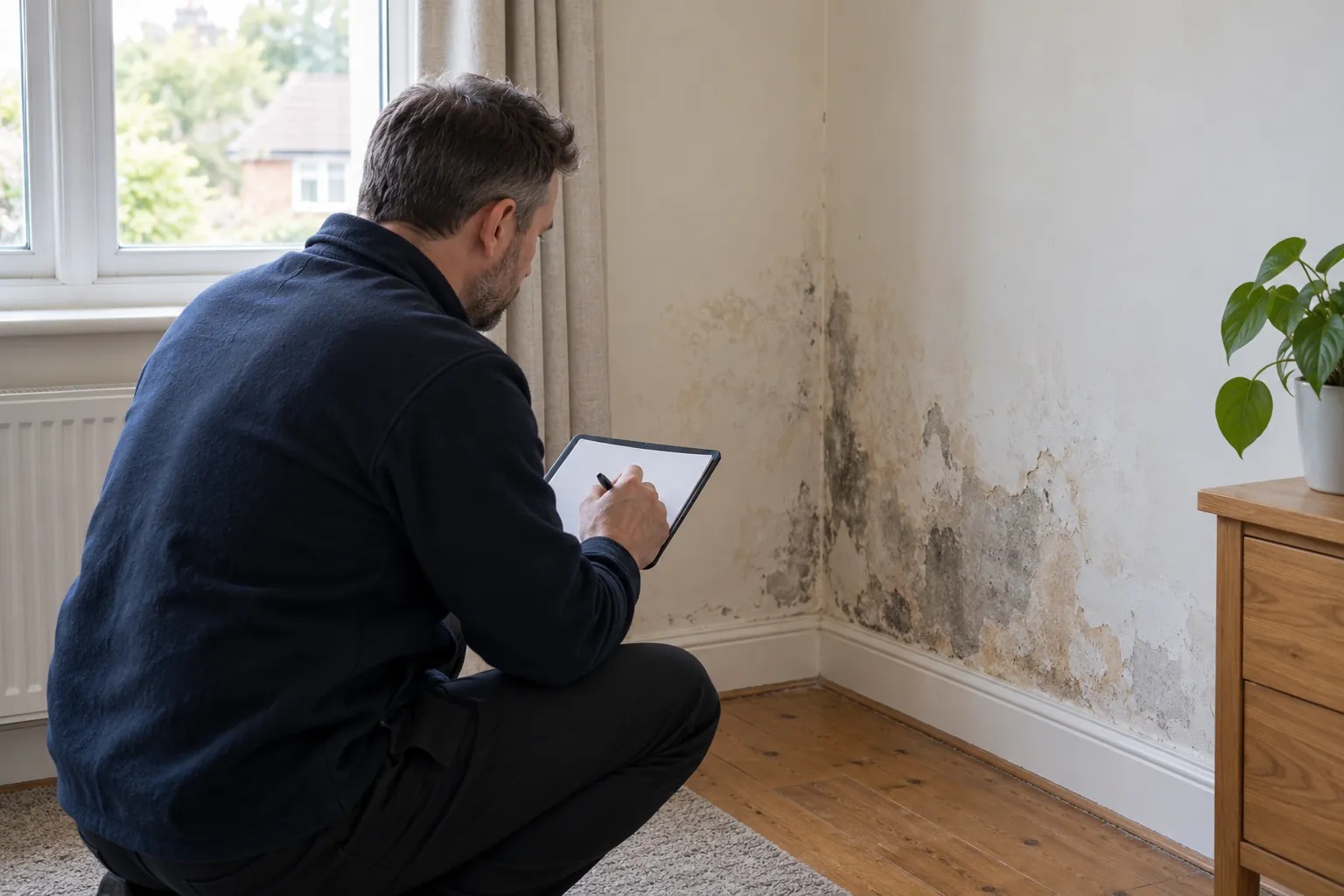
Consider intermittent and historic events
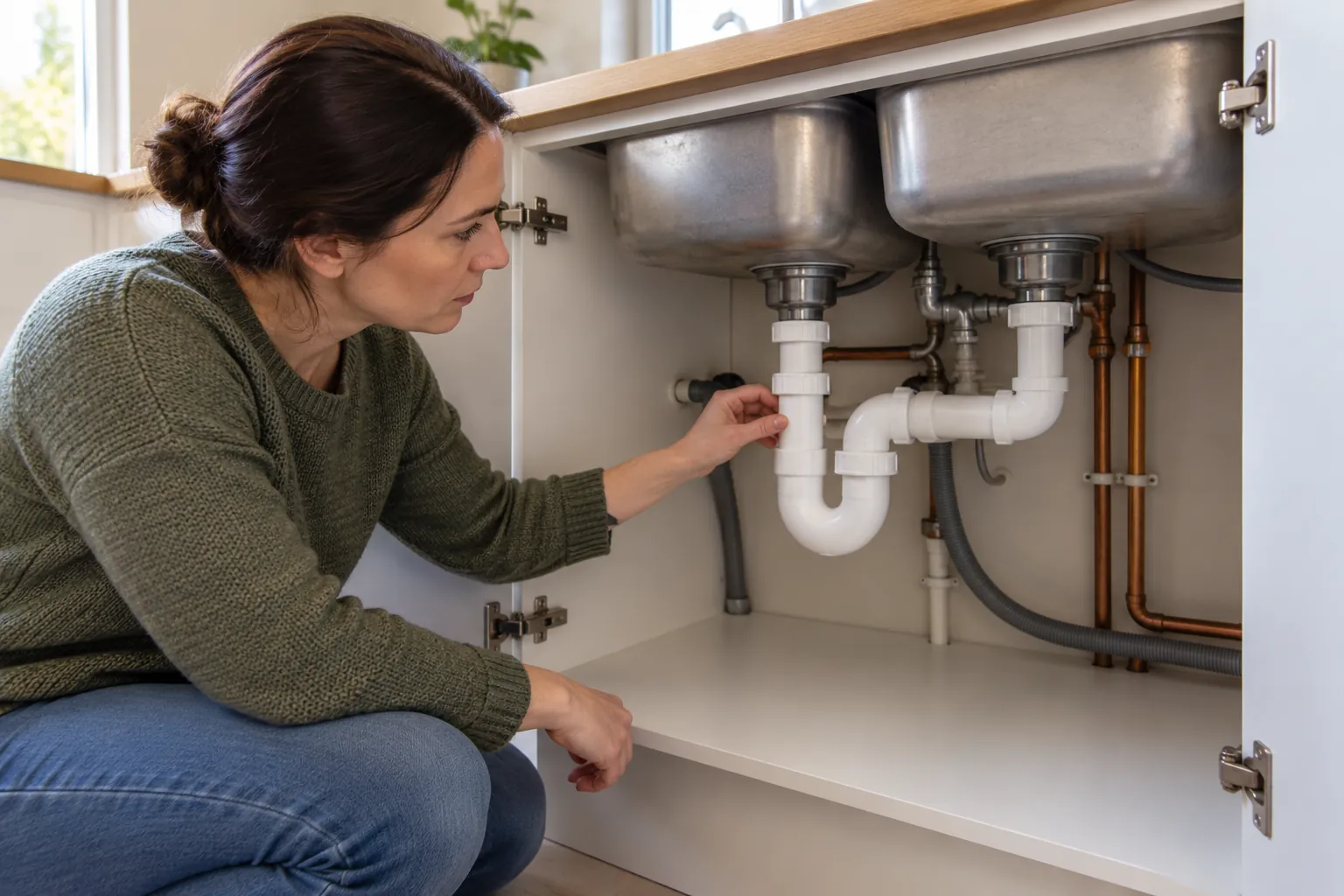
A problem that appears only during use of a shower or after a particular event may not be active at the visit. Describe that timing accurately and keep earlier photographs where available. Do not deliberately create a leak or flood an area to reproduce evidence. Historic damage can also remain after a source has been repaired, so explain what work was done and whether the condition has changed since. The investigation should recognise these limits rather than treat the absence of visible water as proof that no problem exists. If a repeat visit, monitoring or another test is proposed, the purpose and responsibility should be clear. No specific test or piece of equipment is implied by the service name alone.
Evidence and the next decision
| Visible sign or situation | Evidence to consider | Useful next check |
|---|---|---|
| Ceiling stain below bathroom | Possible concealed water route | Review timing and accessible evidence |
| Patch beside pipe boxing | Hidden services nearby | Compare moisture pattern without assuming source |
| Intermittent damp | May relate to use or weather | Record events and discuss the next check |
| Damage after previous repair | Residual or continuing moisture | Review repair history and current condition |
Scope and practical limits
| Part of the assessment | Limitation to understand | Next action |
|---|---|---|
| Non-destructive checks | Can guide but not guarantee location | Further access may be needed |
| Concealed services | Route may be uncertain | Specialist plumbing assessment may follow |
| Repair | Not automatically included | Agree contractor scope separately |
| Material restoration | Damage may remain after source repair | Plan reassessment and making good |
Keep alternative sources under consideration
Concealed plumbing is not the only explanation for a damp ceiling or wall. Rainwater entry, condensation and water travelling from another area can produce similar signs. The investigation should use the distribution and timing to decide which possibility needs attention next. A patch that worsens after rain may justify external observations, while wet cold surfaces across several rooms may call for condensation assessment. More than one source can coexist. Ask which evidence supports a suspected leak and what would help distinguish it from the alternatives. This prevents a recommendation for intrusive plumbing work being based only on an assumption, while allowing a focused specialist check where the available information genuinely points in that direction.


Agree any further access before it happens
Opening a wall, removing boxing or lifting a finish changes the scope of work. It may involve permissions, concealed services and responsibility for reinstatement. These matters need a separate agreement with the appropriate contractor. The inspection can identify where further access may be useful without authorising destructive work. In a rented or shared building, confirm who controls the affected area and who can approve access. If water may originate from another dwelling, arrangements may need the relevant owner or manager. Do not assume that one visit provides access to every possible route. Clear limits help you understand what has been checked and why a remaining question requires another stage.
Separate detection from the repair decision
Evidence of a possible source should lead to an appropriate repair assessment, not an automatic promise that the issue will be fixed during the investigation. A plumber or another suitable contractor may need to establish the component, repair options and practical access. Ask whether the finding is confirmed or provisional and what information should be passed to that contractor. Costs, materials and reinstatement belong to the separate repair scope. Where more than one trade is involved, retain the findings so each party understands what has already been observed. This service does not include general plumbing repairs, building restoration or a guarantee that every concealed route will be identified without opening the construction.
Review the affected area after the source is addressed
Stopping a source of water and restoring affected material are separate stages. Dampness, stains or mould may remain after a repair. Ask the relevant contractor how the repair will be checked and whether further assessment of the material is needed before decoration. Do not assume that a clean-looking patch proves the whole construction is dry. Where mould treatment is required, its scope should reflect the surface condition and any ongoing moisture concerns. Keep a record of the repair and subsequent changes, particularly if the patch returns. For a Stanmore HA7 property, this sequence helps connect the initial investigation with the eventual outcome rather than treating detection, repair and redecoration as unrelated tasks.
Questions about hidden leak detection
Do you guarantee finding every hidden leak?
No guaranteed location outcome is stated. Concealed routes, access and intermittent conditions can limit an investigation. The scope should explain the checks proposed, what they can establish and how further specialist investigation or access may be recommended if the source remains uncertain.
Will walls or floors be opened during the visit?
Intrusive access is not assumed. If it becomes a useful next step, the reason, permission and responsibility for reinstatement must be discussed separately. Do not remove panels or finishes to prepare without an agreed purpose and an appropriate contractor arrangement.
Does a damp ceiling always mean a bathroom leak?
No. Nearby plumbing is one possibility, but water can travel and other sources may produce similar signs. The timing, distribution and surrounding evidence help guide the investigation. A specific defect should not be confirmed solely from the room located above the stain.
Can you help after a plumber has repaired a leak?
Explain what was repaired and how the affected area has changed since. Residual damage and ongoing moisture are different questions. An assessment can consider the available evidence, while repair verification and any further plumbing work remain matters for the appropriate contractor.
What should I bring to the enquiry?
Provide the property location, affected room and approximate dates. Mention previous leaks, repairs and any pattern linked to use or rainfall. Photographs can help explain the visible area. You do not need to identify a pipe or diagnose the cause before calling.
Discuss the affected areas
Call with the property location, the affected rooms and a brief history. We can discuss the proposed scope and what information is needed before a visit is agreed.