
Home / Mould Removal
STANMORE HA7 / PROPERTY ASSESSMENT
Mould treatment and removal for your home
Arrange treatment of affected walls, ceilings and other accessible surfaces, with the scope based on their condition. This service page explains preparation, removal work and handover. For an overview of all inspection and moisture services in the area, visit our homepage.
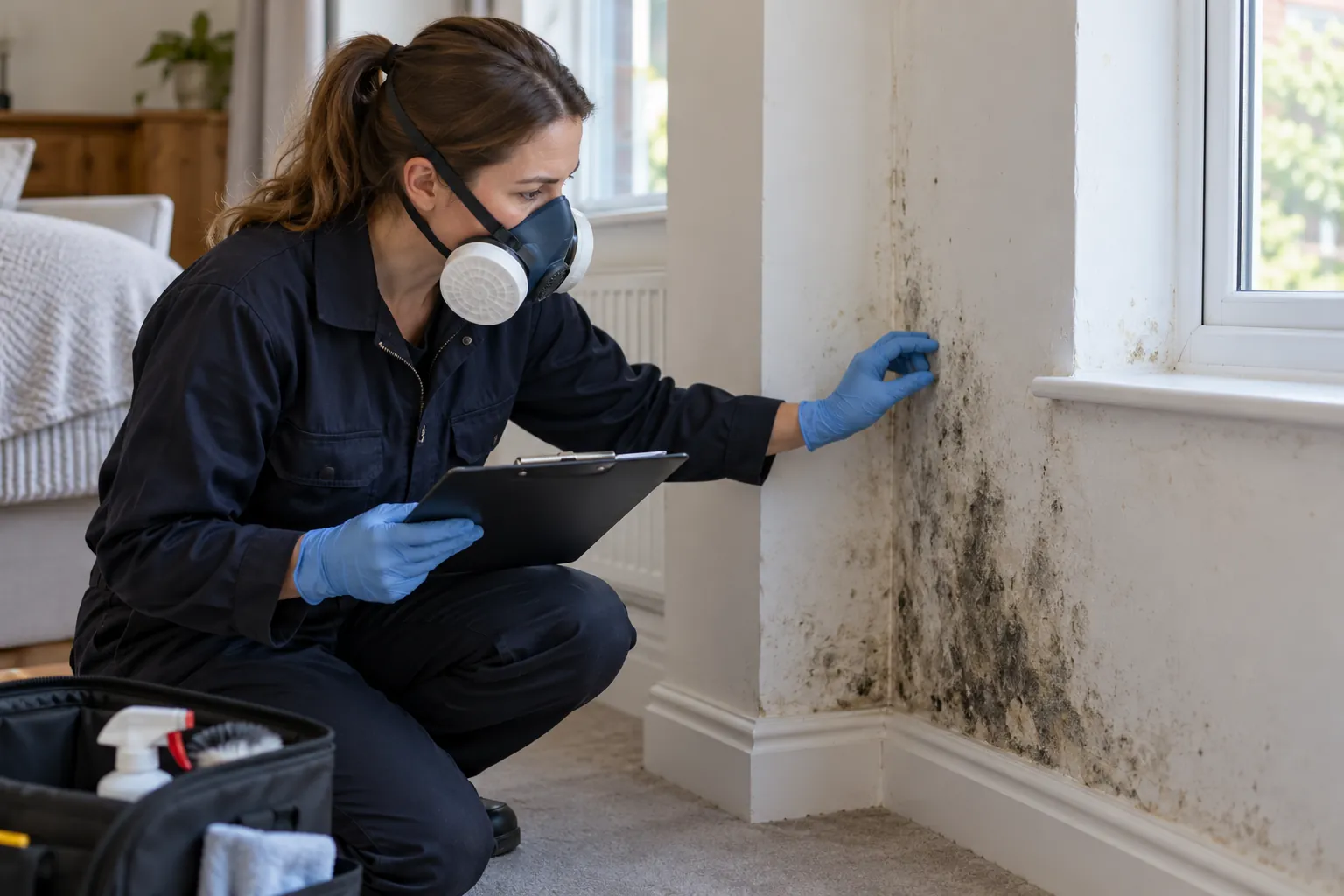
Quick answers about the service
What is included in a mould removal enquiry?
We discuss the rooms and materials affected, previous cleaning and any known moisture problem. The proposed scope should identify the surfaces to be treated, preparation and access requirements, and what may need separate repair. An enquiry does not establish the method or price before the condition and extent have been considered.
Does treatment resolve the moisture source?
Treating visible growth and resolving its cause are related but separate tasks. Condensation, a concealed leak or external water entry may need investigation alongside removal. The agreed work should distinguish treatment from any separate repair, with remaining moisture concerns explained rather than assuming that a clean-looking surface confirms the cause has gone.
Define the surfaces before agreeing the work
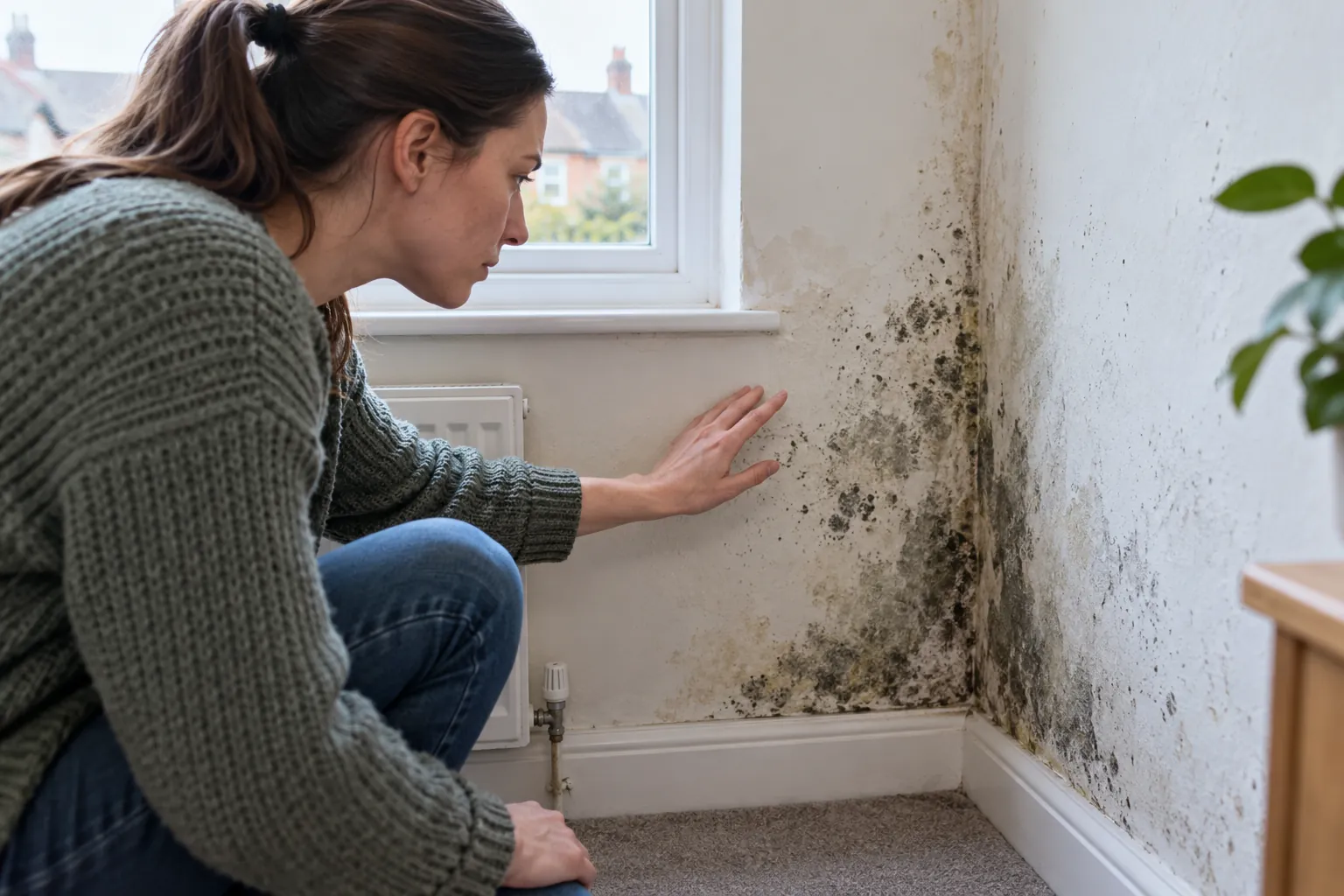
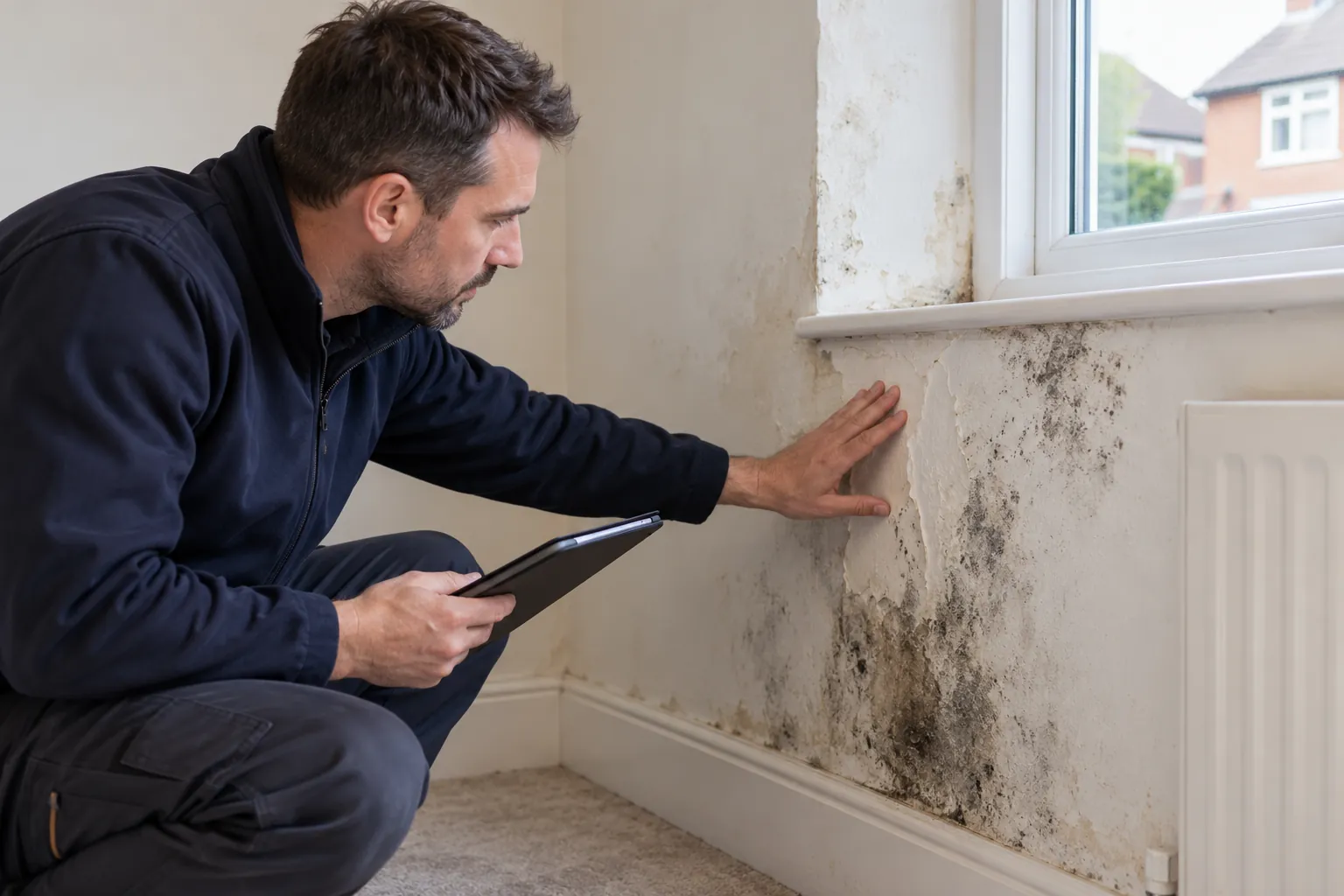
Start with a room-by-room description. A small patch on washable paint is different from widespread growth on softened plasterboard, damaged wallpaper or porous furnishings. Tell us which surfaces are affected and whether there is visible deterioration. The inspection should consider the material as well as the size of the patch, because removing growth cannot automatically restore a damaged finish. Ask which areas are included and whether any surfaces will be left for another contractor to assess. This gives you a usable scope rather than an open-ended promise to clean everything. If access is limited by a fitted wardrobe or a high ceiling, describe that at the enquiry stage so that the practical arrangements can be discussed before the visit.
Review previous cleaning and moisture history
Explain what has already been tried, including repainting, household cleaning or previous professional treatment. State when it was done and where growth returned. A freshly painted wall may hide useful evidence, so photographs taken before repainting can help explain the history. Mention leaks, prolonged condensation and any known outside defects. These details do not prove the cause, but they help avoid repeating an approach without understanding why it did not last. The discussion should separate the condition of the surface from assumptions about the building. Where active water remains a concern, further moisture assessment or a separate repair may be needed before the treatment programme can sensibly proceed. Keep the dates approximate if you do not have an exact record.
Evidence and the next decision
| Visible sign or situation | Evidence to consider | Useful next check |
|---|---|---|
| Painted wall | Sound finish, visible growth and damp evidence | Agree suitable treatment and note decoration limits |
| Softened plasterboard | Deterioration and extent of affected material | Discuss separate material assessment |
| Window reveal | Condensation pattern and finish condition | Consider condensation investigation |
| Recurring patch | Previous treatment and moisture history | Review the contributing source |
Scope and practical limits
| Part of the assessment | Limitation to understand | Next action |
|---|---|---|
| Surface treatment | Concealed cavities may remain inaccessible | Record access limits |
| Appearance | Staining or damaged decoration can remain | Confirm intended finish |
| Moisture | Cleaning does not repair a leak | Arrange the appropriate investigation |
| Recurrence | Conditions can change after treatment | Follow property-specific advice |
Plan treatment around the material
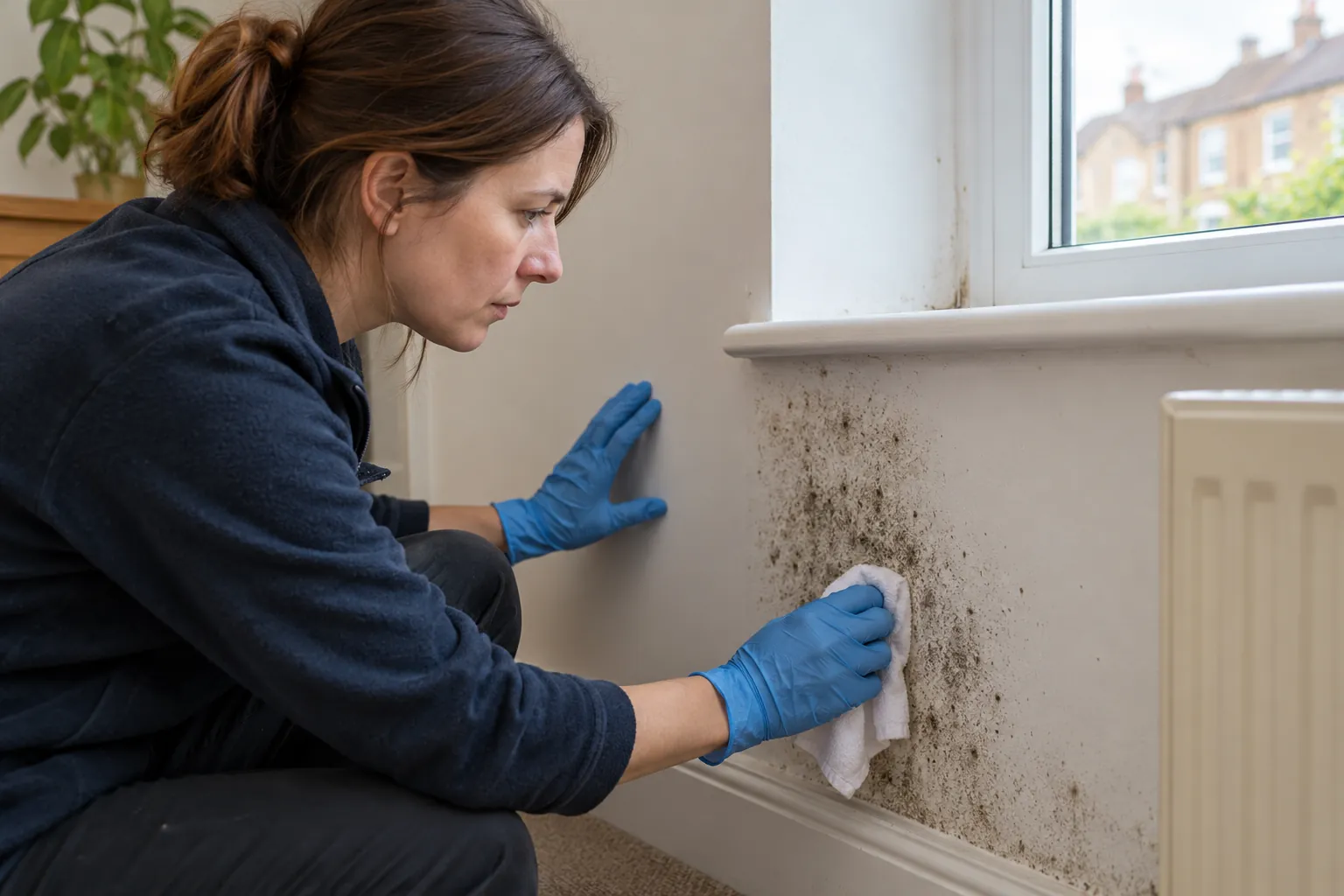
Appropriate removal work depends on the substrate, the finish and the extent of deterioration. Accessible sound surfaces may be suitable for treatment, while crumbling, saturated or deeply affected material can require a different decision. Do not assume that all plaster, sealant, wallpaper or timber can be restored in the same way. The proposal should explain the intended result and any limitations, including permanent staining or damaged decoration. Specific products, application methods and equipment need confirmation for the actual work; they are not fixed by this website. If a test area or further assessment is appropriate, its purpose should be explained. Replacement, redecoration and building repairs are separate matters unless they have been expressly included in an agreed scope.
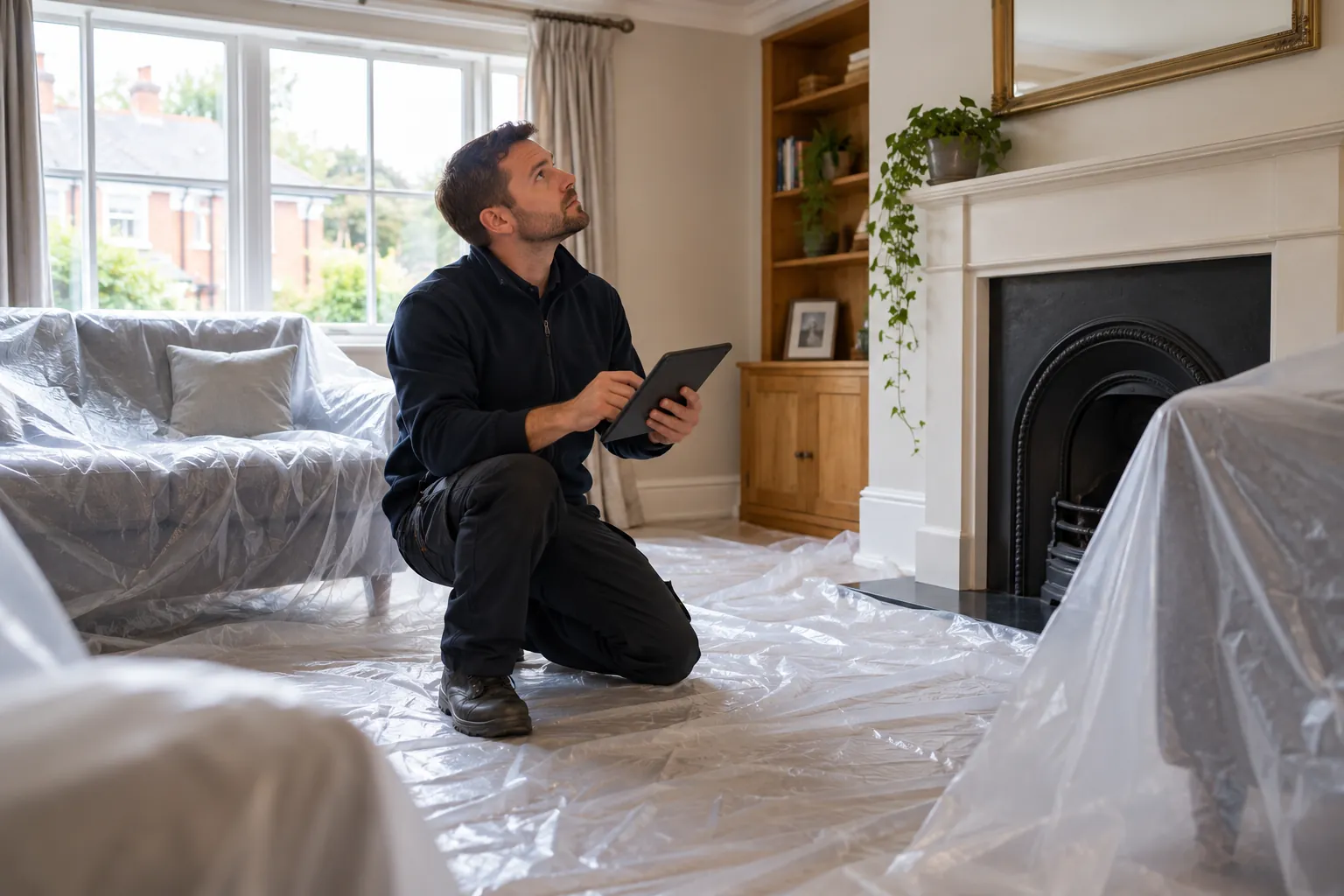
Prepare the room and protect access routes
Before the visit, discuss how the affected surfaces can be reached and which belongings need moving. Small personal items can be cleared from the agreed area, while heavy furniture requires a suitable handling arrangement. Do not move unsafe or unstable pieces solely to expose a wall. Protection of nearby items and any temporary restrictions on room use should be explained in advance. Tell us about pets, occupants who need access through the room and any materials requiring special care. The preparation should suit the proposed treatment rather than rely on a generic instruction. Keep valuable or irreplaceable belongings away from the work area. Ask how the room will be left and when ordinary use can resume under the instructions given for the work.
Carry out the agreed removal work
Treatment should follow the agreed areas and the needs of the materials. Work outside that scope, newly revealed damage or a different condition behind furniture needs discussion before assumptions are made about additional treatment. Suitable working precautions depend on the extent and method selected. Do not combine household chemicals or apply another product while work is being arranged, because residues and altered finishes may affect the proposed approach. If a surface cannot be safely accessed, that limitation should be recorded. The purpose is to remove or treat the growth on suitable surfaces while recognising when cleaning is insufficient. This service does not imply that concealed cavities have been opened, that all spores have been eliminated or that an unresolved moisture source has been repaired.
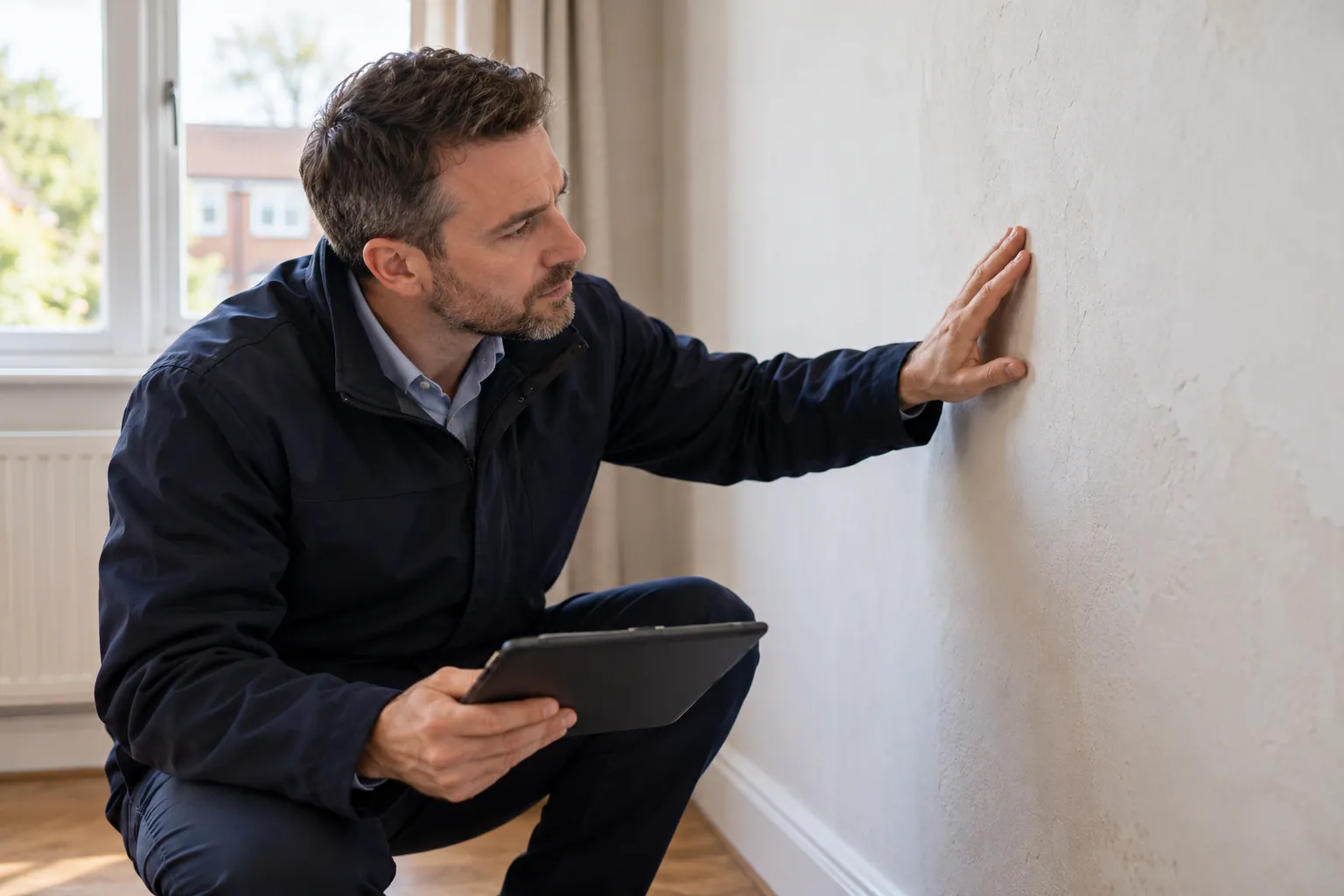
The visit, step by step
01
Define the affected area
List the rooms, surfaces and visible extent. Explain previous cleaning and the return of growth so the proposed removal scope reflects the present condition rather than the first photograph alone. Identify any areas hidden by fixed furniture before access arrangements are agreed.
02
Review suitability for treatment
Consider whether the finish is sound, damaged or deteriorated. A surface that can be treated is different from material requiring separate replacement assessment. Confirm what is intended to be cleaned and what remains outside the proposed work before preparation begins.
03
Agree preparation and room use
Discuss possessions, furniture, protection and access routes. Explain occupant or pet needs in advance. Follow the arrangements supplied for the selected work, including any temporary room restrictions, rather than assuming a general website description determines when every room can be used.
04
Treat the agreed surfaces
Work follows the agreed scope and material needs. Newly revealed damage or inaccessible areas should be discussed rather than silently added to the work. Specific products and methods require confirmation for the visit; no particular treatment system is promised by the illustration.
05
Review completion and finish limits
Check the included areas and discuss remaining staining or damaged decoration. Establish whether further material assessment or making good is needed. A change in appearance does not prove that concealed construction is dry or that a separate moisture source has been repaired.
06
Leave a clear follow-up plan
Retain the instructions and identify any unresolved moisture actions. Note changes if growth returns and explain the exact location when contacting us. Separate further investigation, repair and decoration so the next step follows the findings rather than repeating treatment without reviewing the cause.

Check the result without promising a new finish
The final review should compare the completed work with the agreed scope. Ask about any remaining marks, damaged finishes or areas that could not be treated. A stain can remain after growth has been addressed, and redecorating is not automatically part of removal. Equally, the disappearance of dark patches does not demonstrate that the wall is dry throughout or that a leak has stopped. Where continuing dampness is suspected, the next investigation should be made clear. Keep any instructions supplied for the treated surfaces and follow the advice about drying or room use. If the condition changes afterwards, note the location and timing and contact us with those details so the issue can be considered against the original findings.
Reduce the conditions that allow recurrence
Prevention advice should relate to what was observed in your home. It may involve maintaining clear airflow behind furniture, using existing extract ventilation effectively or reviewing how indoor moisture is managed. Where there are signs of a leak or rainwater entry, arranging the appropriate investigation and repair matters as much as the visible treatment. Advice is not a guarantee against future growth, because weather, building conditions and room use can change. Ask which recommendations you can act on and which require a separate contractor. Avoid covering a damp surface with new paint before its condition has been considered. A practical handover identifies the unresolved questions and the next action, rather than leaving you with a broad instruction to ventilate more.
Agree what happens if more damage is found
Removing furniture or inspecting an edge can reveal a larger affected area than the first photographs showed. Discuss how changes to the proposed scope will be communicated. Additional work should be explained in relation to the newly visible material and condition, with any effect on preparation or access made clear. Where a landlord or managing agent must authorise work, establish that responsibility before the visit. An occupier providing access is not necessarily authorised to approve replacement materials or repairs. If another trade is needed, distinguish that recommendation from a confirmed booking with that trade. Keeping these decisions explicit helps the treatment stay focused on the agreed surfaces and avoids confusing mould removal with a wider refurbishment or building investigation.
Questions about mould removal
Can I repaint straight after treatment?
Follow the instructions for the surfaces and the work carried out. Repainting a surface that is still damp can conceal rather than resolve the problem. Ask about drying, remaining stains and whether decoration is included. There is no universal interval that can be confirmed without considering the material and condition.
Does removal include wallpaper replacement?
Do not assume replacement or redecoration is included. Wallpaper may be affected differently from the underlying wall, and its condition needs consideration. The quotation should identify whether removal, disposal, making good or new decoration forms part of the work, or whether those tasks need a separate arrangement.
What if mould is behind a fitted unit?
Tell us about the unit and any visible signs before booking. Access may be restricted, and dismantling is not assumed. The accessible areas can be assessed while the limits are explained. Further access or another contractor may be needed before the full extent and suitable treatment can be established.
Can I stay in the room during work?
Room-use arrangements depend on the selected treatment and the property. Discuss occupants, pets and access routes in advance. Follow the instructions given for preparation, temporary restrictions and return to normal use rather than relying on a general assurance that every treatment has the same requirements.
How should I report returning growth?
Identify the room, exact surface and approximate timing. Photographs and notes about condensation, rainfall or a known leak can help explain what changed. Contact us to discuss the observations. A review needs to consider the earlier scope and current moisture conditions; recurrence does not by itself identify a single cause.
Discuss the affected areas
Call with the property location, the affected rooms and a brief history. We can discuss the proposed scope and what information is needed before a visit is agreed.