
Home / External Water & Gutter Issues
STANMORE HA7 / PROPERTY ASSESSMENT
External Water & Gutter Assessment in Stanmore
Assess visible rainwater problems and their possible relationship to damp inside the home. The focus is on accessible observations and the next appropriate investigation, with gutter clearance, roofing and building repairs kept as separate contractor work.

Quick answers about the service
What outside signs are worth investigating?
Overflow marks below a gutter, staining near a downpipe joint and damp brickwork beside a window may help explain a water-entry concern. Their location should be considered alongside the indoor patch and its timing. An outside defect is relevant evidence, but it does not automatically prove the route into the building.
Does this service include gutter repair or clearance?
No repair or clearance work is assumed. The assessment can identify visible concerns and explain where an appropriate contractor should check further. Safe access, the exact defect and any proposed work require their own scope. Inspection from an accessible position does not imply roof access or a guarantee that concealed drainage has been examined.
Connect the outside concern with the indoor history
Tell us what you can see outside and whether there is also a patch inside the property. Note whether it changes during or after rain and whether previous clearance or repairs altered the condition. The timing helps frame the assessment, but rainfall alone does not confirm the route of water through the building. If several elevations or rooms are affected, describe them separately. A photograph taken safely from ground level may help explain the position of a gutter or downpipe. Do not climb to obtain an image or inspect during unsafe weather. The enquiry should establish the visible concern, available access and the question that needs answering before a contractor is asked to repair a particular feature.
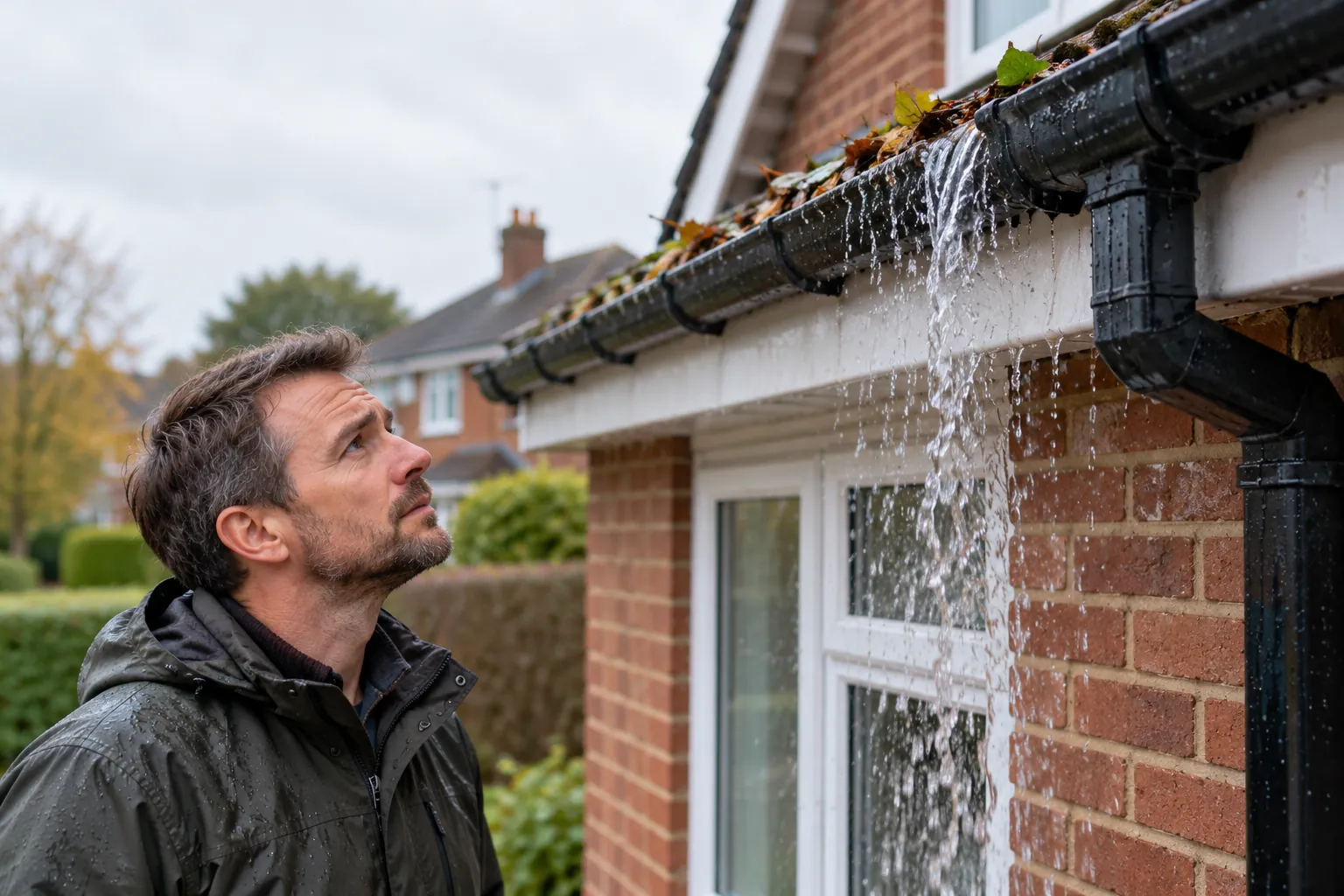
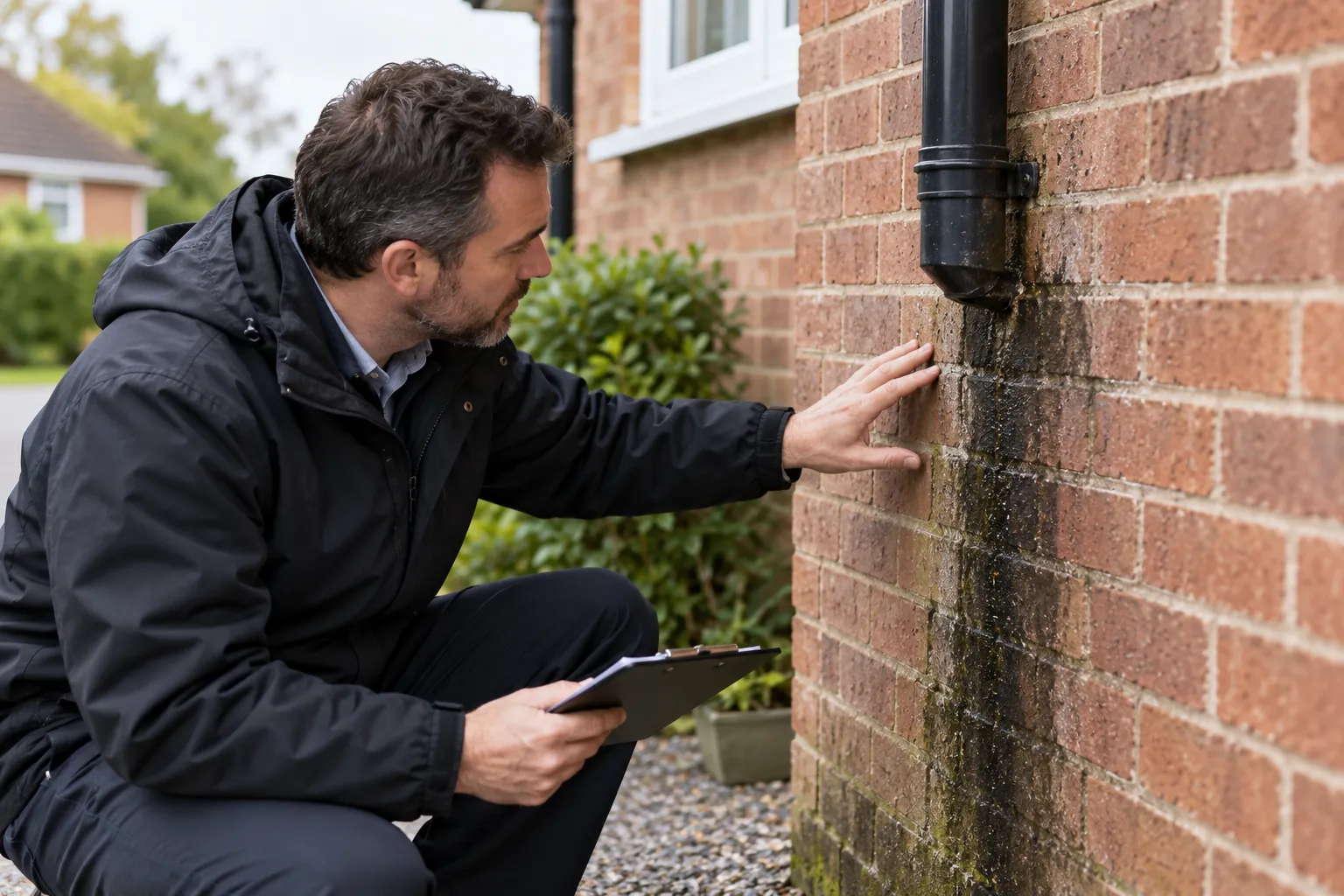
Review visible gutters and roof-edge evidence
Overflow staining, vegetation and apparent displacement can be relevant observations where the gutter is visible. However, a ground-level view may not show the inside of the channel, its fall or the condition of concealed joints. The assessment should identify what was seen and what remains beyond view. A mark below a gutter can indicate past as well as current water movement, so previous work and changes matter. No roof access or gutter clearance is implied by this inspection service. If closer examination is needed, an appropriate contractor must consider safe access and the scope. A clear recommendation describes the concern to be checked rather than presenting a distant observation as a complete repair specification.
Evidence and the next decision
| Visible sign or situation | Evidence to consider | Useful next check |
|---|---|---|
| Staining below gutter | Possible overflow or historic water route | Review visible channel and weather history |
| Marks at downpipe joint | Possible escaping rainwater | Ask contractor to examine connection |
| Damp near window reveal | Possible local water entry | Relate indoor and exterior evidence |
| Ponding by wall | Possible rainwater drainage concern | Consider a separate drainage check |
Scope and practical limits
| Part of the assessment | Limitation to understand | Next action |
|---|---|---|
| High-level gutter | Ground view may be incomplete | Contractor access may be required |
| Underground drainage | Not established by surface observation | Specialist investigation is separate |
| Shared exterior | Permission and responsibility may vary | Contact owner or managing agent |
| Making good | Interior damage can remain after repair | Plan suitable follow-up assessment |
Consider downpipes and visible joints
Water marks around a joint, a disconnected section or dampness along a pipe route may suggest a rainwater issue. Their relationship to nearby windows, wall finishes and indoor staining can help guide further enquiries. Some routes may be hidden behind extensions or within shared areas, limiting what can be established. Explain whether you have seen water escaping during rain, but do not attempt to force water through a system to demonstrate a fault. The condition of a visible downpipe does not reveal every part of the drainage route. If a contractor check is recommended, clarify whether the concern is a joint, an obstruction, a connection or an unknown route requiring further investigation before repairs are agreed.
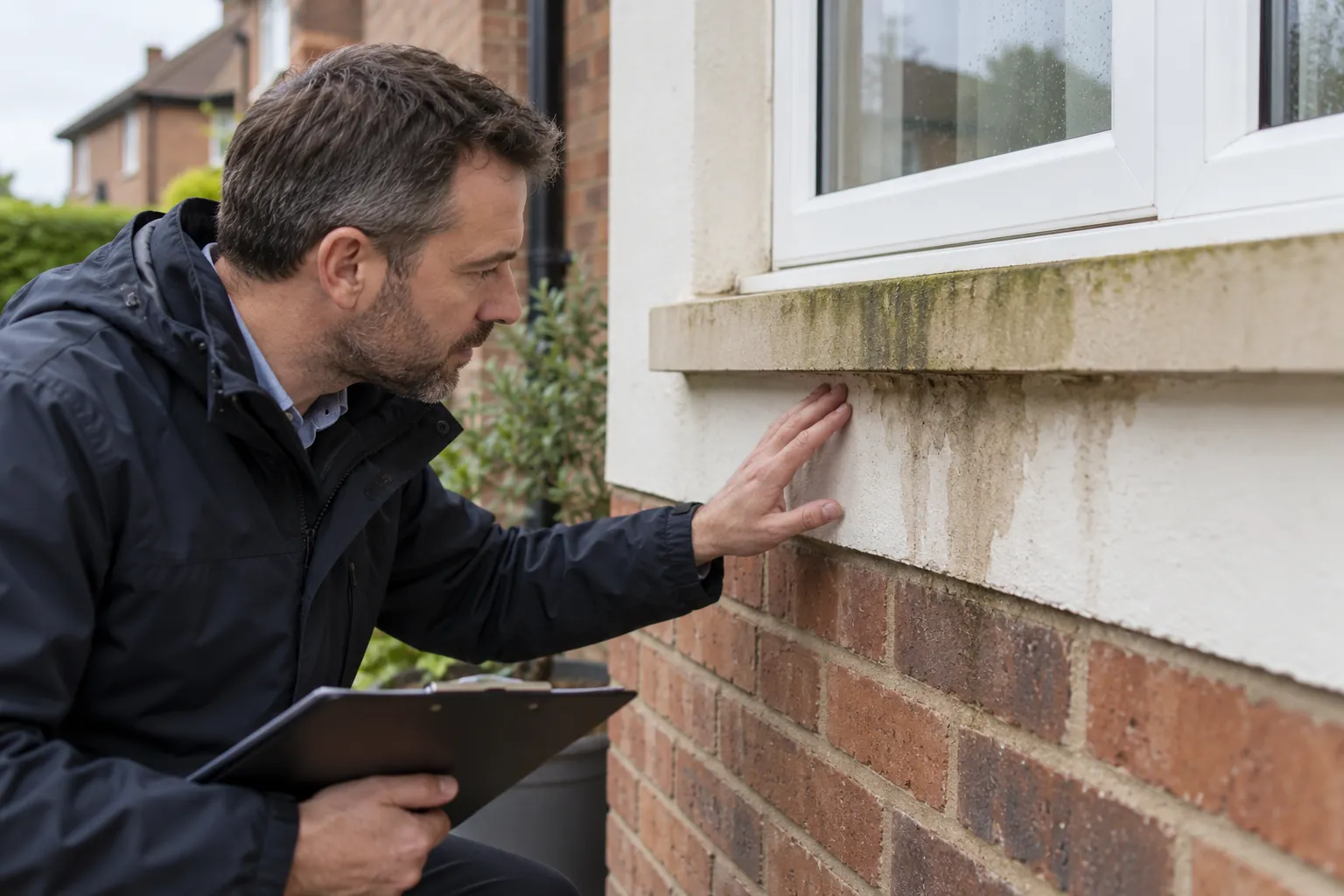

Look at wall staining and local entry points
External staining, damaged finishes and the areas around windows may be relevant to a damp patch indoors. The assessment considers the accessible surface and the pattern of marks, not just the nearest visible defect. Water can travel through construction, and the point of entry may differ from where damage appears. Describe any known repair, sealing or redecoration, because it can change the visible evidence. A visual assessment cannot establish every concealed junction or material condition. Where a building specialist needs to examine a detail, the recommendation should explain the question. This service does not promise masonry repair, resealing, roofing or waterproofing; those tasks need an appropriate separately agreed assessment and scope.
Include ground-level rainwater observations
Wet paving, ponding near a wall or visible staining around a gully can add context to a rainwater concern. These observations do not amount to a drainage survey or prove a concealed blockage. Tell us when water collects and whether the pattern is recent or long-standing. Access to underground routes and specialist drainage testing are not assumed. The assessment can help identify whether another contractor should investigate a particular feature, while keeping uncertainty about hidden connections explicit. Avoid making alterations or directing water against the building to test a theory. Where there is a shared drain or communal exterior, the relevant owner or manager may need to authorise further investigation before any work is arranged.

The visit, step by step
01
Describe weather-related changes
Explain the outside concern, indoor marks and timing after rainfall. Safe ground-level photographs can help describe position. Do not climb or inspect in unsafe weather. The enquiry should establish the question and access rather than assume that a visible defect proves the water route.
02
Review visible gutter evidence
Consider accessible overflow marks, vegetation or apparent displacement. A distant view may not show channel condition or fall. Record what is visible and what needs a closer contractor examination; roof access and clearance are not implied by this assessment.
03
Consider downpipes and wall patterns
Relate visible joints, staining and surrounding surfaces to the indoor history. Concealed routes may remain unknown. The finding should describe the concern to check, not invent a complete repair specification from an outside mark or the nearest pipe.
04
Include accessible drainage context
Ground-level ponding and gully staining can be relevant observations without amounting to a drainage survey. Hidden connections and blockages need appropriate specialist investigation. Shared features may require permission from an owner or managing agent before further access is arranged.
05
Explain limits and the right contractor
Distinguish a suspected issue from a confirmed source. If closer access, roofing, rainwater or building assessment is needed, state its purpose. The recommendation does not include the repair or decide legal responsibility for shared exterior maintenance.
06
Observe the property after separate work
Retain contractor details and note changes after later rain. Interior damage can remain after a source has been repaired. Plan any necessary material reassessment, treatment or decoration separately so the visible result is understood in relation to the source and the repair history.
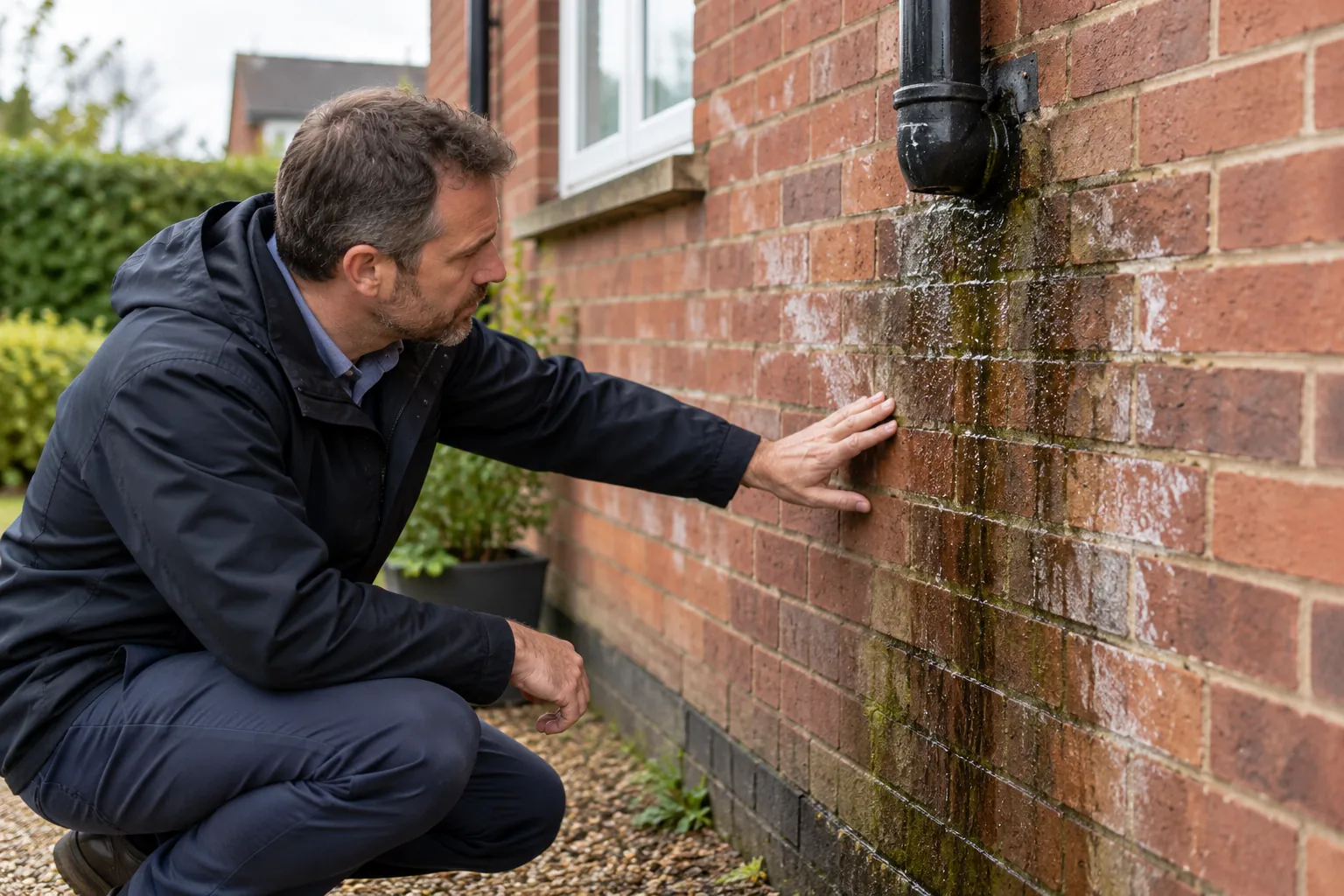
Distinguish external water from indoor condensation
An affected external wall can also be a cold surface where condensation appears. The two possibilities should not be treated as mutually exclusive. Indoor distribution, weather timing and visible outside signs need to be considered together. Explain whether glass becomes wet, whether mould is present and whether a patch changes after rainfall. If the evidence points towards a separate condensation issue, a focused investigation may be recommended. Conversely, visible condensation should not be used to dismiss rain-related damage. The useful outcome identifies which areas support which possibility and what further check would help. It should not assign one explanation to every mark in the home simply because an outside defect has been noticed.
Understand the limits of accessible inspection
High-level features, concealed joints and areas outside the property boundary may remain inaccessible. State these constraints before the visit where possible. In a flat or shared building, responsibility for gutters and exterior walls may involve a freeholder or managing agent. The assessment does not determine legal maintenance responsibility. It can describe accessible evidence and the next investigation while noting the permissions and access still required. If a written record is needed for another party, confirm the format before booking. A recommendation for further contractor checks is not a confirmed quotation or a booking for repairs. Keeping these distinctions explicit helps the findings be used accurately rather than interpreted as proof that all external features have been examined.
Arrange the next contractor check and follow-up
Where a rainwater or building concern is suspected, pass the relevant observations and indoor history to the appropriate contractor. Ask that contractor to confirm the defect, proposed work, access and how the result will be checked. Repairing an outside feature does not automatically restore damp interior materials. Further assessment, drying, mould treatment or decoration may be needed in a suitable order. Keep a record of when the work was done and whether the indoor patch changes after later rainfall. If the issue persists, that history can guide another enquiry. For homes in Stanmore HA7, the aim is a connected sequence from visible signs to the right specialist action, with no assumption that assessment itself includes the repair.
Questions about external water & gutter issues
Will you clear the gutter during assessment?
Clearance is not assumed to be included. The assessment concerns visible issues and their possible relationship to moisture. If clearance or repair is needed, an appropriate contractor should confirm the work and safe access in a separate scope.
Should I wait for rain before contacting you?
You can explain the concern before rainfall occurs. Notes and safely taken photographs from earlier events can help. Do not wait if there is an active incident requiring an appropriate contractor. The inspection scope should acknowledge when the available conditions limit what can be observed.
Does an outside stain prove water is entering indoors?
No. A stain may be historic or unrelated to the internal patch. The location, timing and surrounding construction need consideration. Where the relationship remains uncertain, further investigation should be recommended rather than treating proximity as proof of the source.
Can you inspect a shared building exterior?
Explain the access and management arrangements when enquiring. Some areas may be visible while others require permission or specialist access. The assessment does not decide legal responsibility for shared repairs. A freeholder or managing agent may need to arrange further contractor work.
What happens after a gutter repair?
Keep the repair details and note how the affected indoor area changes. Persistent stains do not alone show that the repair failed, while continuing dampness may need reassessment. Interior treatment, drying or decoration should be considered separately with attention to the material condition.
Discuss the affected areas
Call with the property location, the affected rooms and a brief history. We can discuss the proposed scope and what information is needed before a visit is agreed.