
Home / Damp Inspection
STANMORE HA7 / PROPERTY ASSESSMENT
Damp Inspection in Stanmore
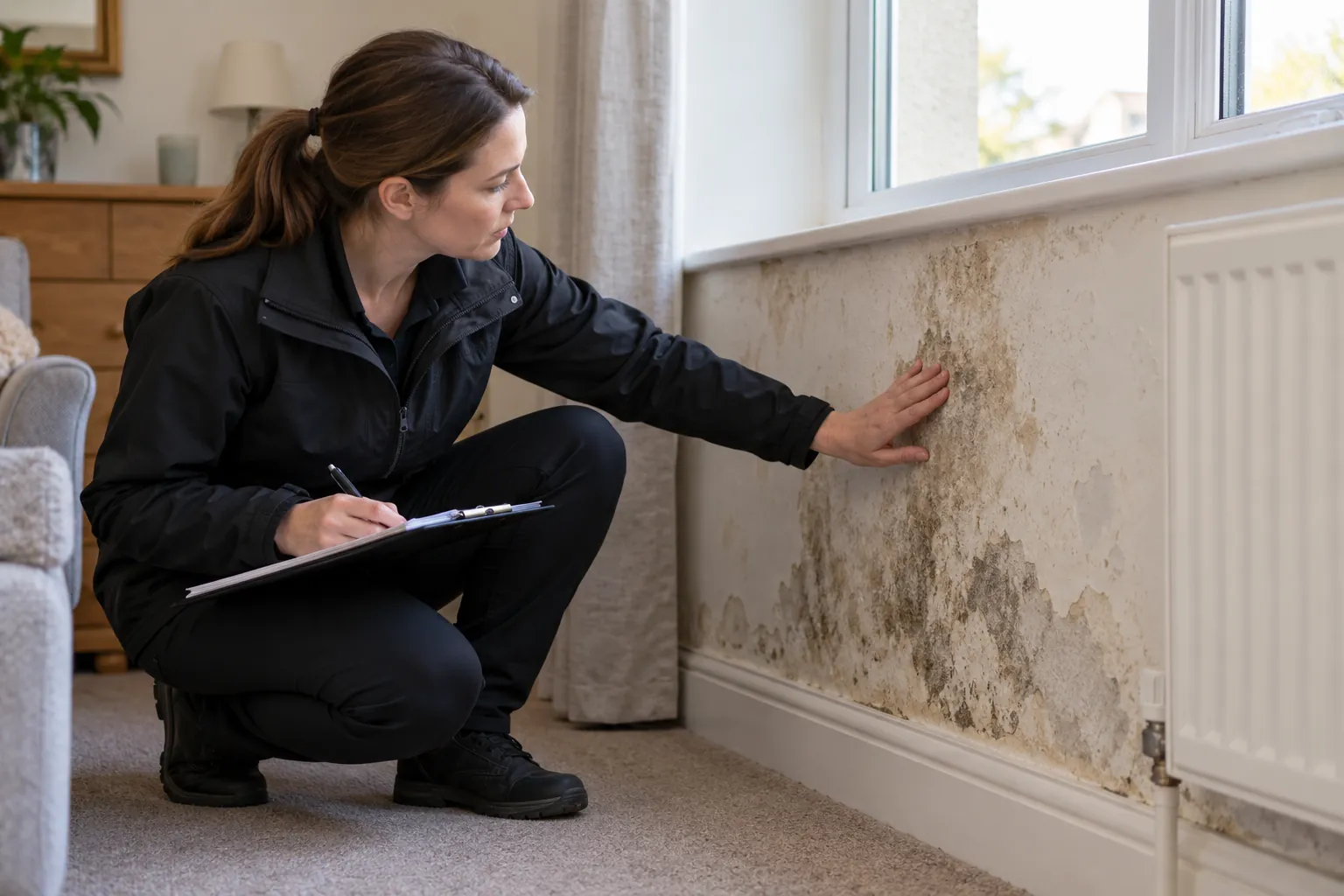
Investigate damp patches, damaged finishes and moisture patterns before deciding what should be treated or repaired. The inspection considers accessible surfaces, the property history and possible sources, with uncertainties and access limits kept clear.
Quick answers about the service
What is checked during a damp inspection?
The assessment considers where dampness appears, the condition of the material and the surrounding evidence. Appropriate moisture readings may support the inspection, but their interpretation depends on the substrate and circumstances. Rainfall patterns, nearby water routes and condensation are considered where relevant. A single reading does not confirm the source.
Does damp inspection include repairs?
Inspection is an assessment of the evidence and possible next steps. It does not automatically include plumbing, gutter, roofing or building repairs. If a defect is suspected, the findings should explain what needs further checking and which separate contractor may be appropriate. Any treatment or repair scope needs its own agreement.
Describe the patch and how it changes
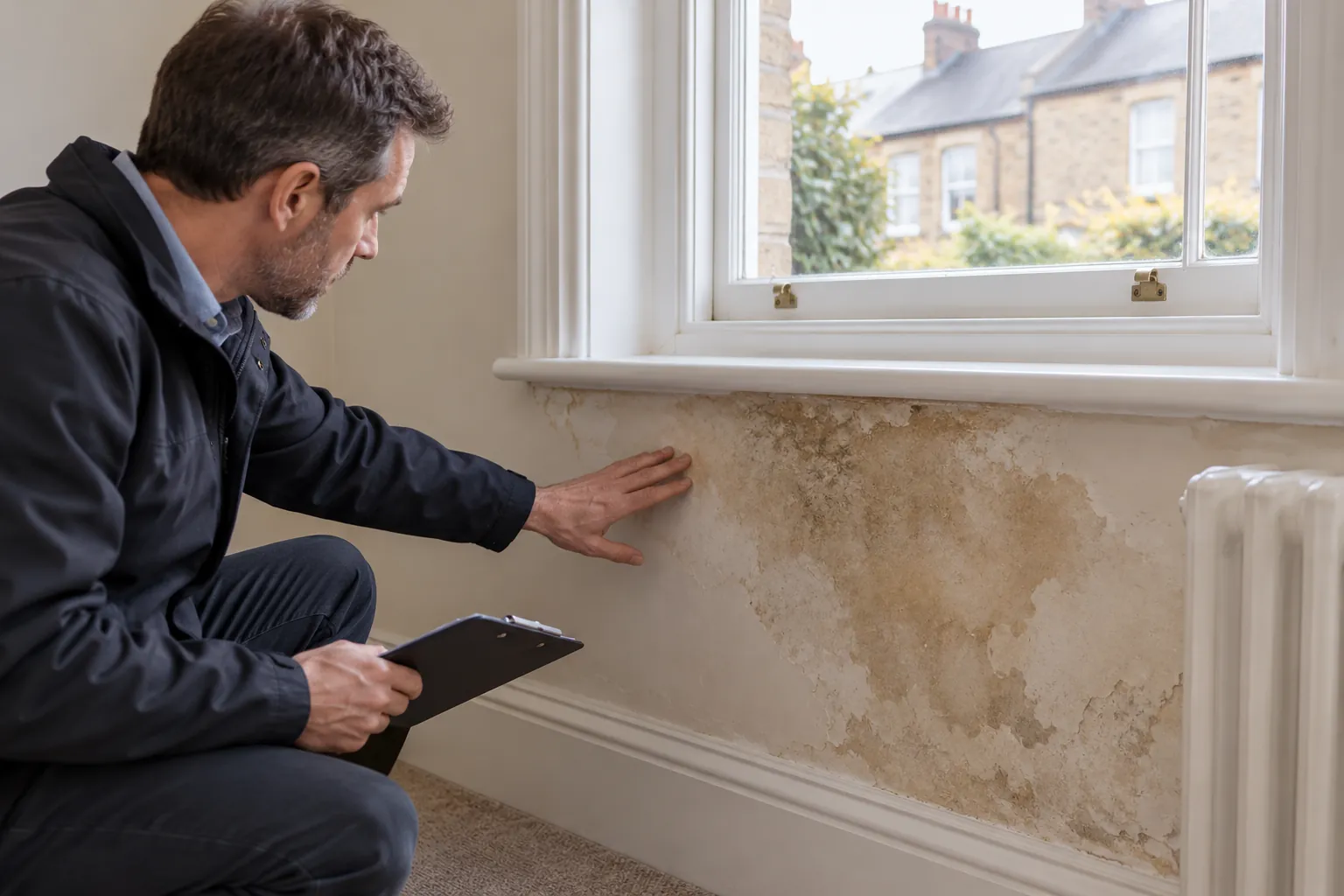
Tell us which room and wall are affected, whether the patch is near the floor or ceiling, and how long it has been visible. Changes over time can be more useful than a single photograph. A mark that grows after rain raises different questions from a surface that becomes wet overnight. Mention changes in colour, texture and size without assuming what they prove. If the area has recently been cleaned or painted, explain that history too. A simple description helps define the inspection and identifies information worth bringing to the visit. For several damp areas, list them separately: two patches in the same property do not necessarily share a source, and their differences may help guide the assessment.
Look at the material as well as the mark
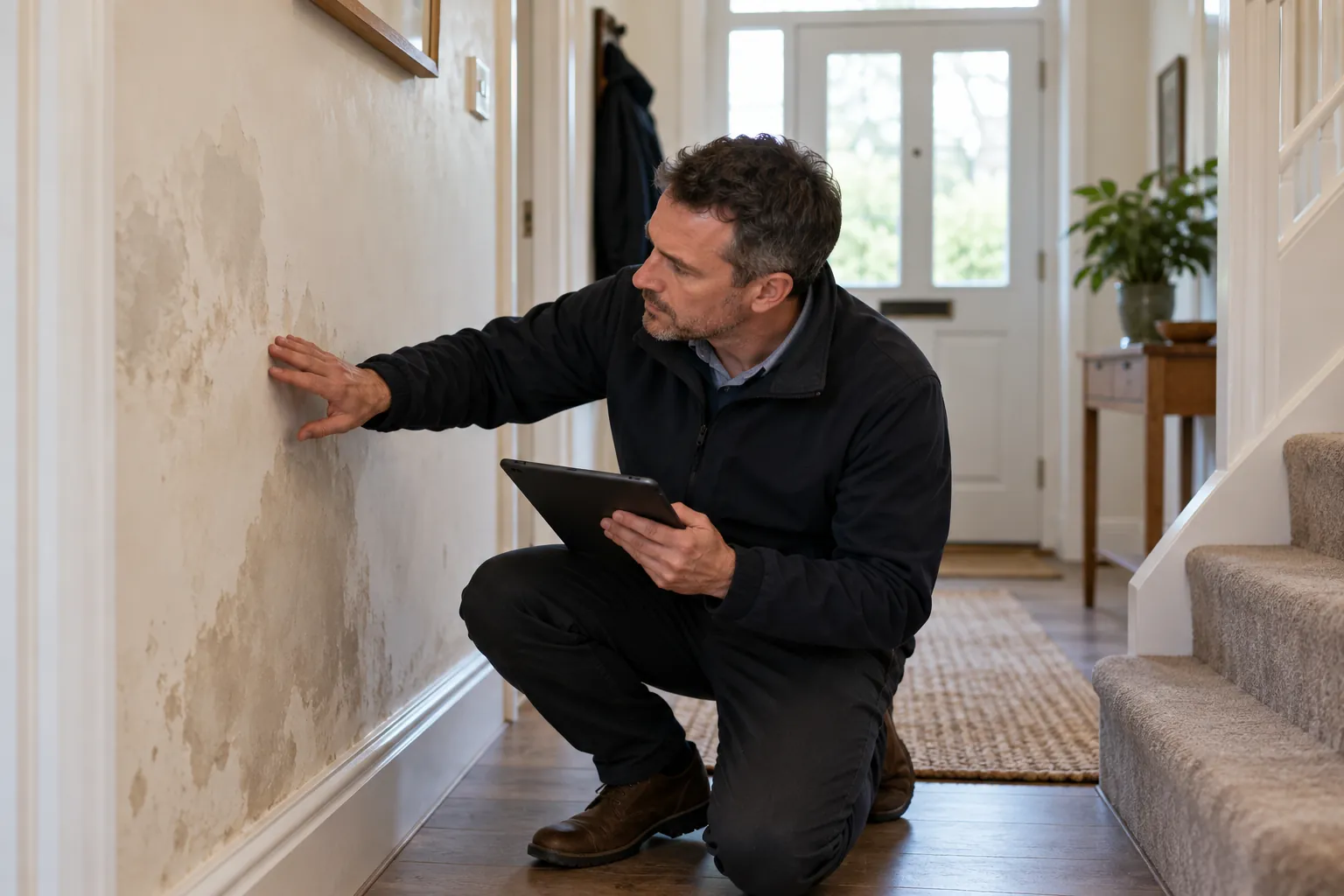
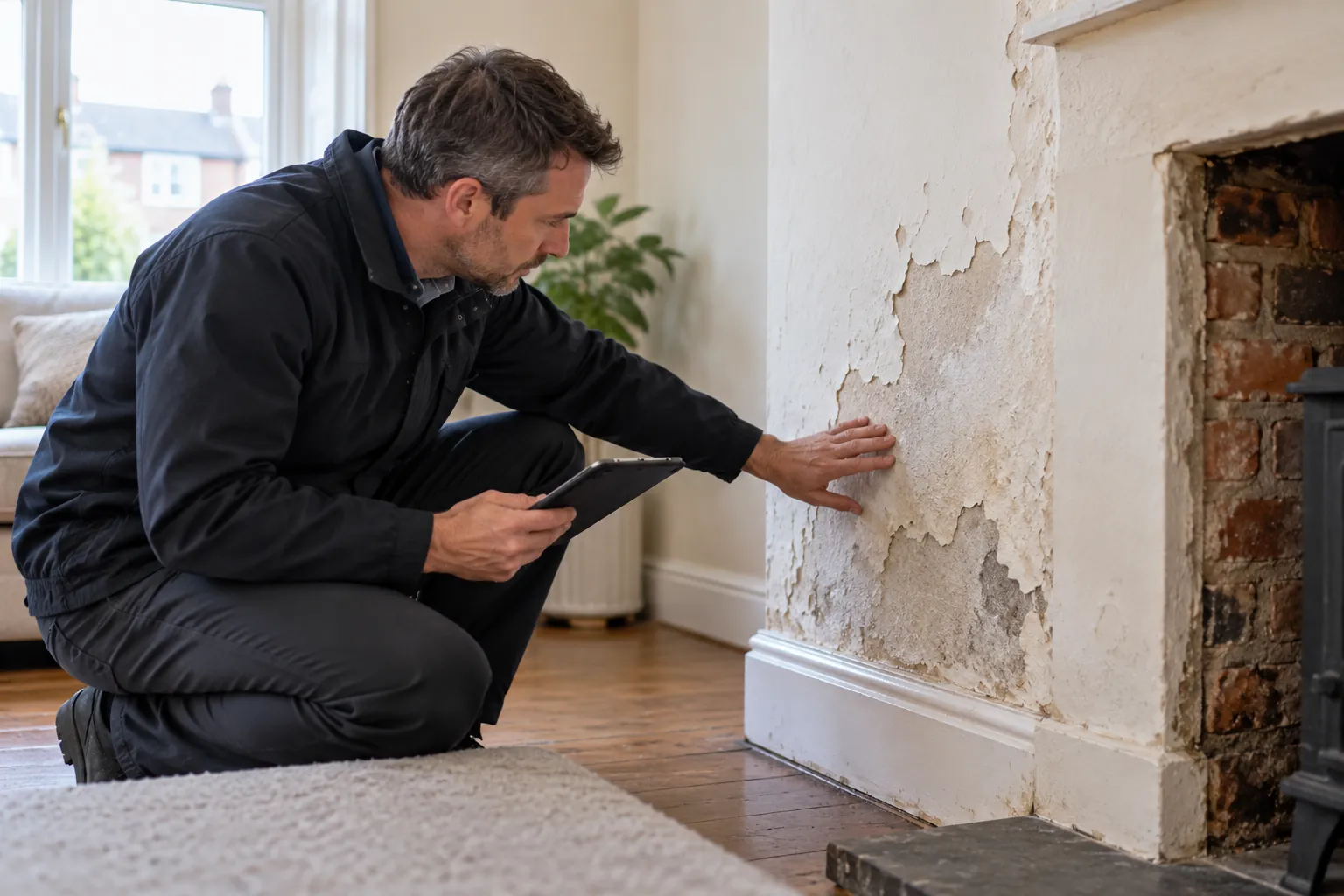
Peeling paint, softened plaster, staining and salt-like deposits can each be relevant, but none should be treated as a complete diagnosis on its own. The inspection considers the visible finish and accessible substrate where it can be examined without damage. Tell us about previous replastering, impermeable coverings or recent redecoration, because these can affect what is visible and how moisture behaves at the surface. A dry-looking finish does not confirm the condition within the wall, while a persistent mark may remain after an earlier source has stopped. The findings should distinguish current damp evidence from historic damage as far as the available observations allow. Making good or removing finishes is not assumed to be included in an inspection visit.
Use moisture readings as supporting evidence
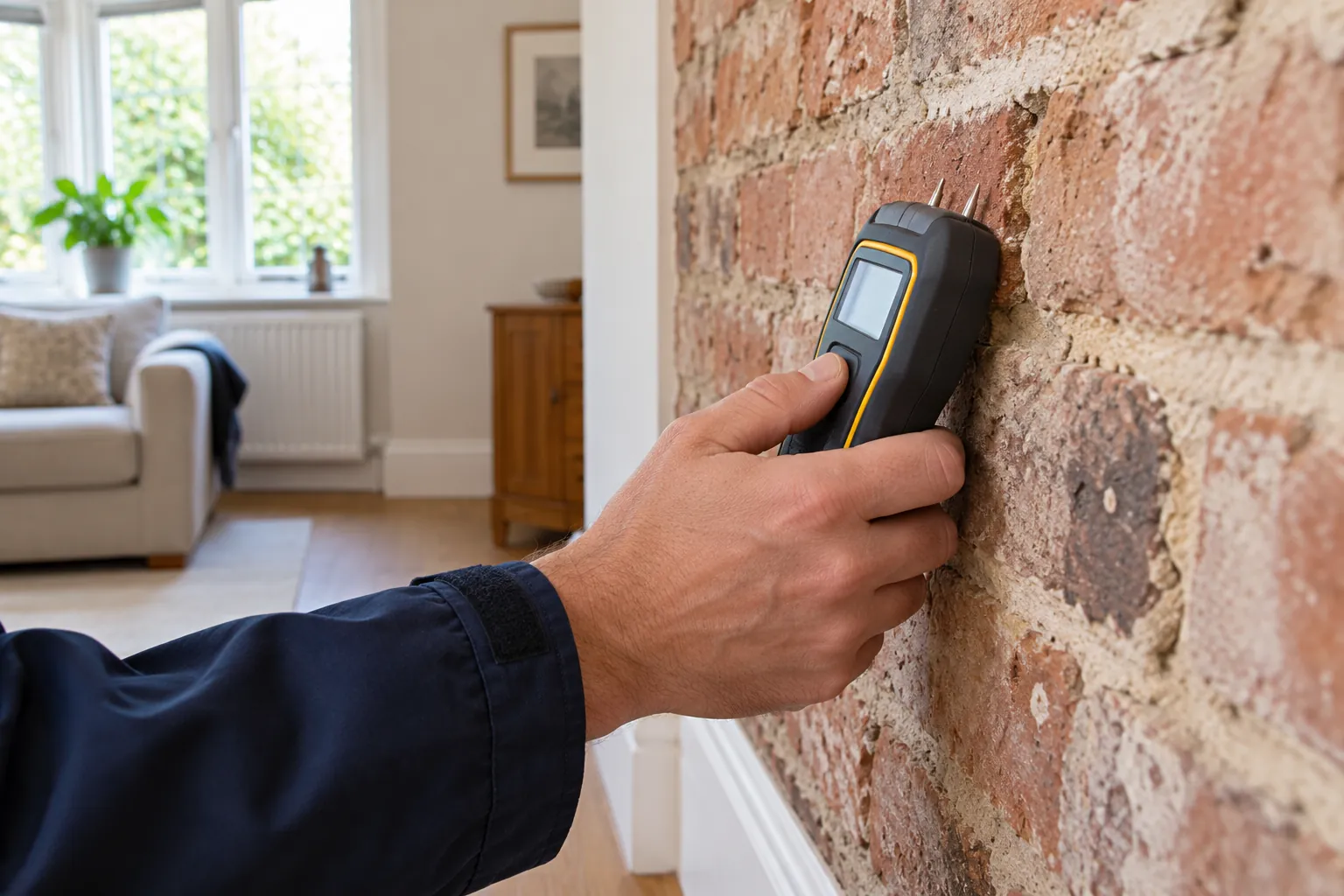
Where suitable checks are included, moisture readings can help compare affected and nearby areas. Their meaning depends on the equipment, material and circumstances. Different substrates cannot always be compared directly, and a high indication does not identify the route by which water arrived. Readings are considered alongside the pattern of damage and other observations. Ask what a measurement supports and what it cannot establish. A single visit also provides only a snapshot, so recent weather, cleaning and changes to room conditions may matter. If the evidence suggests a need for repeat observation, more specialist testing or access beneath a finish, that should be recommended with a clear purpose. Do not interpret a number without the material and inspection context.
The visit, step by step
01
Collect the patch history
Describe the affected material, location and changes over time. Include rain-related changes, earlier leaks and redecoration. Where several patches exist, distinguish their histories so a common source is not assumed simply because they are in the same property.
02
Inspect surfaces and nearby evidence
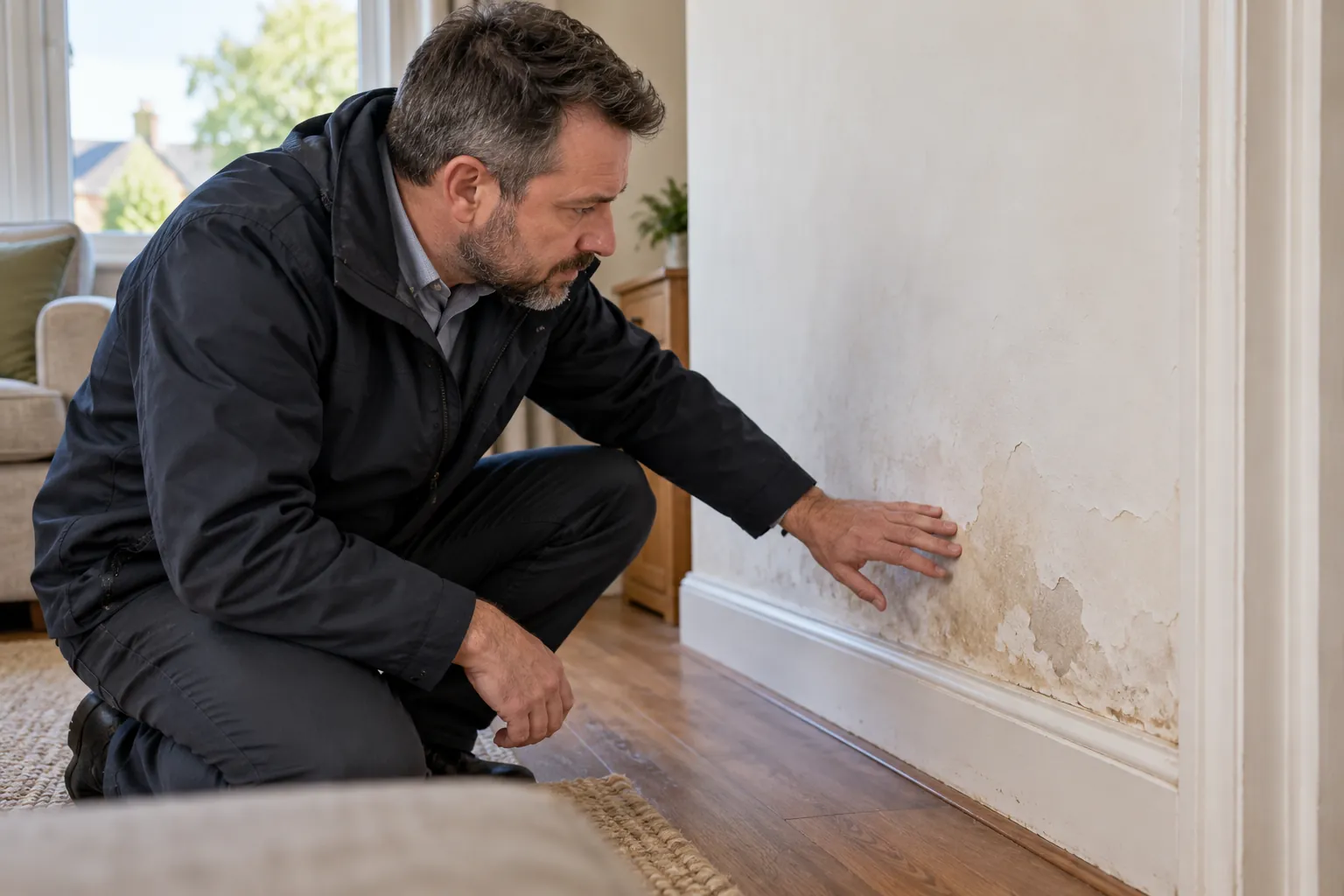
Review accessible stains, deterioration and surrounding construction. Explain what is hidden by coverings or fixed items. A remaining stain may reflect an earlier event, so the material condition and current observations should be considered alongside the history rather than from appearance alone.
03
Compare appropriate moisture indications
Where measurements are included, interpret them for the material and the circumstances. Comparisons can support a moisture pattern but do not locate the source directly. Ask what the readings establish and whether repeat observation or another check would materially change the next decision.
04
Consider competing sources
Review evidence for condensation, local water routes and external entry where relevant. More than one mechanism can coexist. The findings should identify which observations support each possibility and what further check could distinguish them if the source remains uncertain.
05
Define the further investigation
Identify any need for specialist access, hidden leak enquiries or outside contractor assessment. Explain the purpose and limits of the recommendation. Opening finishes and responsibility for reinstatement require a separate agreement, rather than being inferred from a general damp inspection booking.
06
Plan the order of follow-up
Separate source investigation, repair, material reassessment and decoration. Where mould is present, its treatment needs a suitable scope too. Keep repair records and observe changes so the next decision can use the history instead of covering a persistent patch without understanding it.
Consider condensation alongside other sources
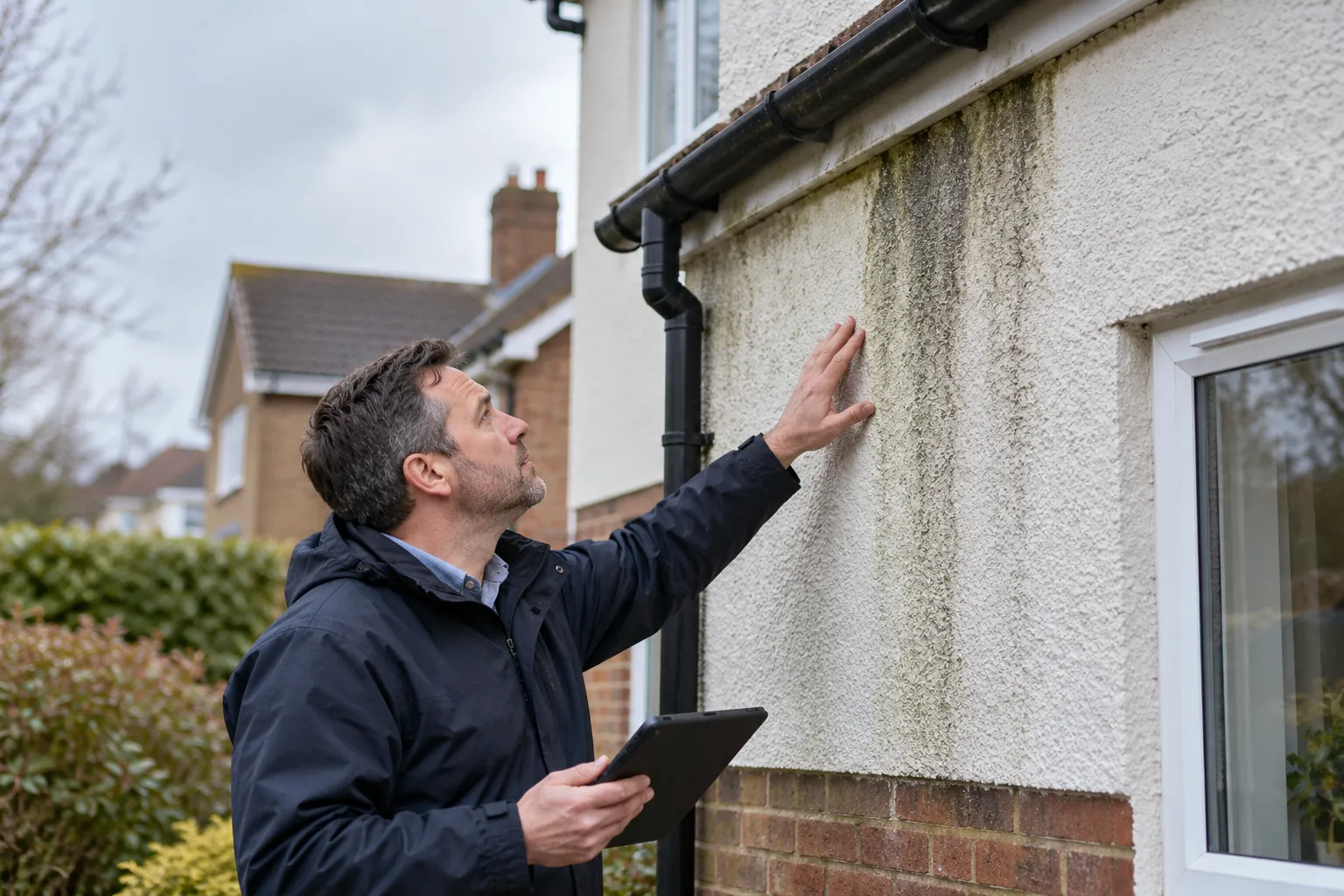
Dampness on a cold wall may be associated with condensation, but local leaks and outside water entry must remain part of the assessment where there is supporting evidence. The position of the affected area, nearby windows and the way the room is used help frame the questions. Condensation and another source can occur together. Tell us whether surfaces become visibly wet, whether the problem is seasonal and whether there is a relationship to cooking, bathing or drying clothes. This is useful context rather than proof of occupant responsibility. Where the room conditions need a more focused review, a condensation investigation can be discussed. The inspection should avoid labelling every damp patch as the same mechanism simply because mould is also present.
Relate indoor signs to outside observations
Rainwater staining, a downpipe joint or a wall exposed to weather may be relevant to an internal patch. Where safe and accessible, outside observations can help identify a plausible relationship. However, seeing a defect nearby does not prove that it causes the inside damage. Record whether the patch changes after rainfall and whether any previous work altered the condition. High-level features and concealed wall construction may remain beyond the inspection scope. If further external access or a contractor check is needed, the recommendation should identify what needs establishing. This assessment does not include roof access or a promise to repair gutters, brickwork or waterproofing. Those tasks require an appropriate separately agreed arrangement and suitable access.
Recognise possible concealed water routes
A local patch beside a bathroom, kitchen or pipe enclosure may justify further leak enquiries. The visible position is a starting point, not necessarily the origin: water can travel through materials and appear away from its source. Explain known plumbing changes, past leaks and whether the area changes during use of nearby facilities. Do not open boxes or disturb concealed services simply to prepare for a visit. The inspection can consider accessible evidence and recommend a more focused hidden leak investigation where appropriate. Confirmed plumbing repair is a different task. If active water or an electrical concern is present, contact the relevant qualified service promptly rather than relying on a routine damp visit to manage an immediate problem.
Interpret findings without overstating certainty
The useful distinction is between observed dampness, a plausible source and a confirmed defect. Ask which category each finding belongs to. Some questions can be answered from accessible evidence, while others depend on weather, further access or another specialist. The recommended next step should be proportionate to what remains uncertain. A damp inspection is not automatically a full building survey, an intrusive wall investigation or a specification for structural work. If you need a written record for a landlord, insurer or another contractor, agree the format and purpose before booking. Clear limits make the findings more useful, because they show where a treatment decision can proceed and where further evidence should be obtained first.
Plan follow-up work in the right order
Before redecorating, establish whether the source needs repair and how the material condition will be reassessed. A new finish can hide a patch without showing that the wall has dried. Ask what would indicate that a separate investigation or repair has addressed the concern, and whether further observation is appropriate. Where mould is also present, suitable removal can be discussed with attention to the substrate and ongoing moisture. Keep the scope of each task clear: inspection, leak investigation, repair, drying and decoration are not interchangeable. For a Stanmore HA7 enquiry, bring the history and any previous contractor findings together so the next decision is based on the property evidence rather than a series of disconnected treatments.
Evidence and the next decision
| Visible sign or situation | Evidence to consider | Useful next check |
|---|---|---|
| Patch worsens after rain | Possible external water entry | Relate rainfall to accessible outside features |
| Local damp beside bathroom | Possible concealed water route | Review timing and nearby services |
| Wet external corner | Possible surface condensation | Assess room conditions and wall pattern |
| Old stain without current damp | Historic damage may remain | Review history and available moisture evidence |
Scope and practical limits
| Part of the assessment | Limitation to understand | Next action |
|---|---|---|
| Readings | Material-dependent indications | Interpret with surface and location |
| External checks | Ground-level or accessible views | Specialist access may be needed |
| Concealed construction | Not visible without access | Agree further investigation separately |
| Repairs | Not implied by assessment | Use an appropriate contractor |
Questions about damp inspection
Does a high meter reading prove a leak?
No. Readings need to be interpreted for the material and the circumstances. They can support a pattern of moisture evidence but do not identify the source on their own. Nearby services, surface condition, weather history and other observations may all be relevant before a leak investigation is recommended.
Can a patch stay visible after a leak stops?
Staining and damaged finishes may remain after the original event. The inspection considers current evidence alongside the history, but a single view may not settle every question about drying or concealed materials. Explain when the leak was repaired and whether the patch has changed since that work.
Should I strip the wallpaper first?
Do not remove finishes solely to prepare without discussing the purpose and scope. It may change the visible evidence or expose damaged material. Tell us what is covered and what you can see. If further access is needed, the reason and responsibility for making good should be agreed separately.
Can condensation and water ingress occur together?
Yes, more than one mechanism may contribute to dampness in a property. A cold surface can collect condensation while another area is affected by water entry. The inspection should consider the distribution and timing of each problem rather than assuming that one explanation applies everywhere.
Will I receive a repair specification?
An inspection can inform recommended next steps, but a detailed repair design or full building survey is not automatically included. State what you need when enquiring. The scope should confirm how findings are communicated and whether another specialist needs to assess the proposed repair before work is arranged.
Discuss the affected areas
Call with the property location, the affected rooms and a brief history. We can discuss the proposed scope and what information is needed before a visit is agreed.