
Home / Condensation & Ventilation Assessment
STANMORE HA7 / PROPERTY ASSESSMENT
Condensation & Ventilation Assessment in Stanmore
A room-focused assessment of moisture generation, existing extraction and the routes available for air movement. Understand what can be checked, where further specialist work may be needed and which practical changes suit the observed conditions.

Quick answers about the service
What does a ventilation assessment consider?
The assessment looks at the affected rooms, existing extractors, accessible ventilation routes and the way moisture is generated and removed. It considers the context of condensation rather than judging a fan from its sound alone. The agreed scope should explain any measurements, access limits and whether another specialist needs to investigate further.
Does assessment include fitting a new extractor?
Installation, electrical work and duct alterations are not assumed parts of this service. The findings may identify a reason to discuss improvements with an appropriate contractor. Suitability, access and any required design or testing need their own scope. The purpose here is to understand the existing situation before a particular installation is proposed.
Identify the rooms where moisture remains
Describe the bathroom, kitchen or bedroom in which moisture persists and when the problem is most noticeable. A steamy mirror immediately after a shower presents different questions from dampness that remains on a bedroom wall all day. Tell us how long visible moisture tends to remain and which surfaces are affected. Include existing extractors, vents and any known changes to the room. This establishes a useful scope without assuming that every room needs new equipment. If a landlord or agent controls alterations, explain who can authorise further work. The assessment can then distinguish practical use of existing features from recommendations that would require permission and a separate contractor.


Review existing extract ventilation
An extractor that makes a noise is not necessarily moving moisture effectively through a suitable route. The assessment considers the accessible fan and surrounding arrangement within the agreed scope. Tell us about apparent changes in performance, visible obstruction or previous work, while avoiding dismantling covers or electrical components yourself. A detailed performance test, electrical diagnosis or commissioning exercise is not automatically included. Ask which observations or checks are proposed and what they can establish. Where a fan or its route cannot be adequately assessed, the limitation should be recorded. A recommendation for specialist inspection is more useful than assuming that replacing the visible unit will resolve an unknown problem farther along the ventilation path.
Consider where extracted air can go
The destination and condition of an extraction route matter alongside the fan. Some parts may be concealed in boxing, ceiling voids or external construction. Where the route is accessible, its visible arrangement can inform the assessment; where it is not, conclusions need to remain qualified. Tell us if you know where an outlet terminates or have documentation from previous installation work. Do not open a ceiling or remove panels to prepare unless a suitable scope and permission have been agreed. Roof access and concealed duct investigation are separate considerations. The findings should make clear which parts of the route were seen and which need an appropriate specialist before a design or installation decision is made.
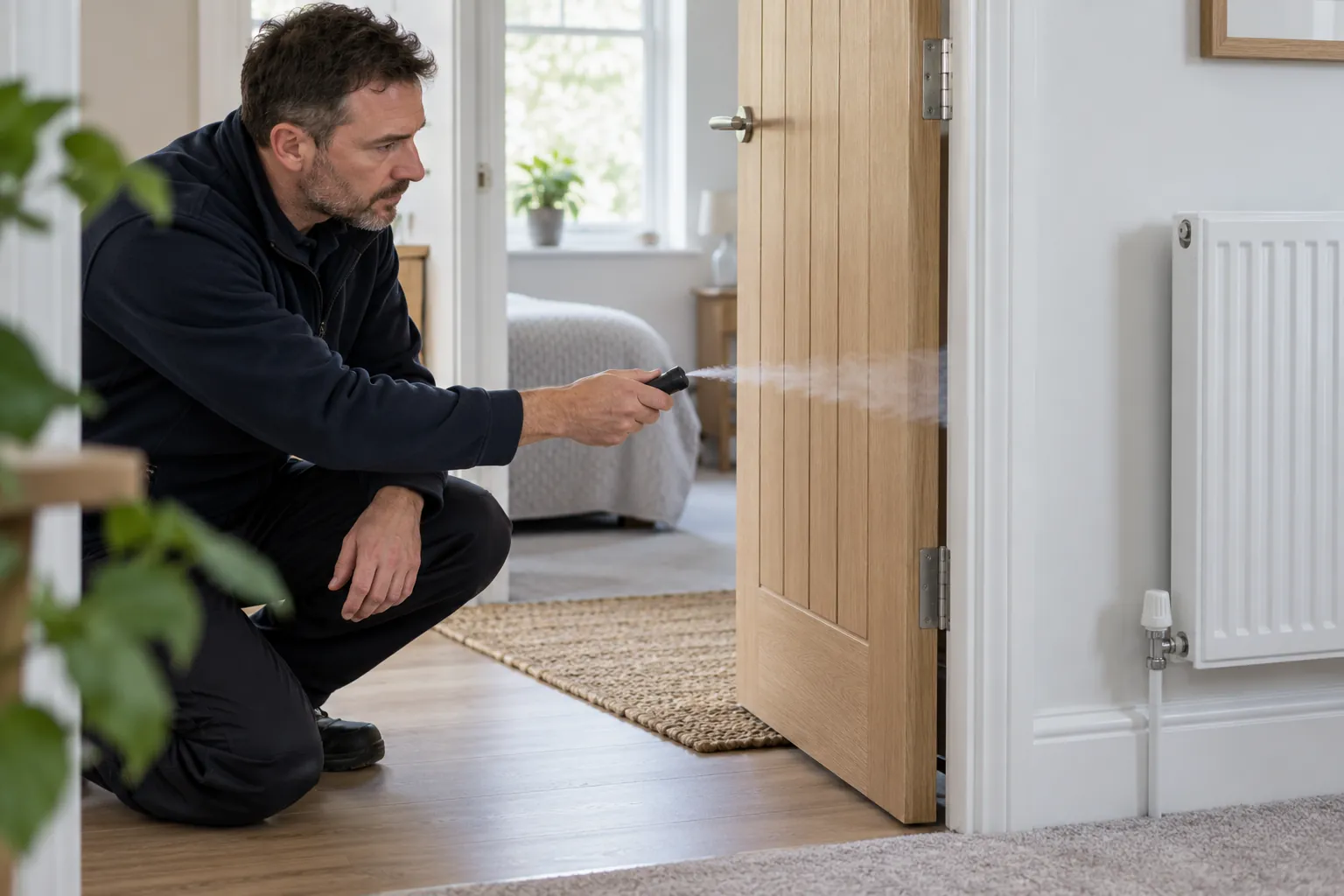
The visit, step by step
01
Identify rooms and existing provision
Describe the affected rooms, visible extractors and background vents. Explain when moisture remains and any apparent performance change. The enquiry should establish what can be accessed and what question the assessment needs to answer before equipment or alterations are proposed.
02
Review accessible extraction features
Consider visible condition and the surrounding arrangement within the agreed scope. Do not assume that sound proves performance. Electrical diagnosis, commissioning or dismantling needs an appropriate separate scope if required, with the limits of the accessible observations made clear.
03
Consider routes and replacement air
Review accessible outlets and room connections where relevant. Concealed ductwork can leave important uncertainties. Advice must respect building and fire-safety requirements; alterations to doors, vents or shared features are not authorised simply by an assessment recommendation.
04
Relate the findings to moisture use
Consider how bathing, cooking and everyday activity interact with existing ventilation and cold surfaces. The purpose is to identify realistic actions for this property. Where the wider condensation pattern remains unclear, another investigation may be useful before a specific installation is commissioned.
05
Separate advice from installation design
Make clear whether the next action concerns operation, maintenance, performance testing or new work. Each has different requirements. Equipment selection and electrical or building alterations need an appropriate contractor and any necessary permission, rather than an assumed extension of the assessment.
06
Review the outcome of changes
Record the original pattern and observe what changes after agreed actions. Persistent mould or dampness may require separate treatment or investigation. The handover should identify what can be acted on now and what still depends on specialist checks or access.

Look at background air routes
Window vents, accessible air openings and the relationship between rooms can affect how replacement air reaches an area where moisture is generated. The assessment considers visible features in their property context. Obstructions, furniture and changes to internal doors may be relevant, but advice must respect the purpose of the building components. Do not alter fire doors, cut openings or block vents based on a general suggestion. Where a proposed improvement touches fire safety, building requirements or electrical work, suitable specialist advice is needed. The aim is to identify a practical question about airflow and direct it to the right next action, rather than issue a blanket instruction to leave every door or window open.
Relate airflow to everyday moisture
Cooking, bathing and indoor drying add moisture at different times and in different rooms. Explain the ordinary routine so recommendations can be realistic. An assessment should consider the available ways for moisture to leave, not simply instruct the household to stop normal activities. Surface temperature and heating patterns may also influence where moisture becomes visible. Where condensation is widespread or the daily pattern is unclear, a dedicated condensation investigation can help extend the picture. Existing ventilation can sometimes be used differently, while other circumstances call for a contractor assessment. The distinction should be explained with the reasons observed in your home, rather than relying on generic advice unrelated to the room layout or equipment.
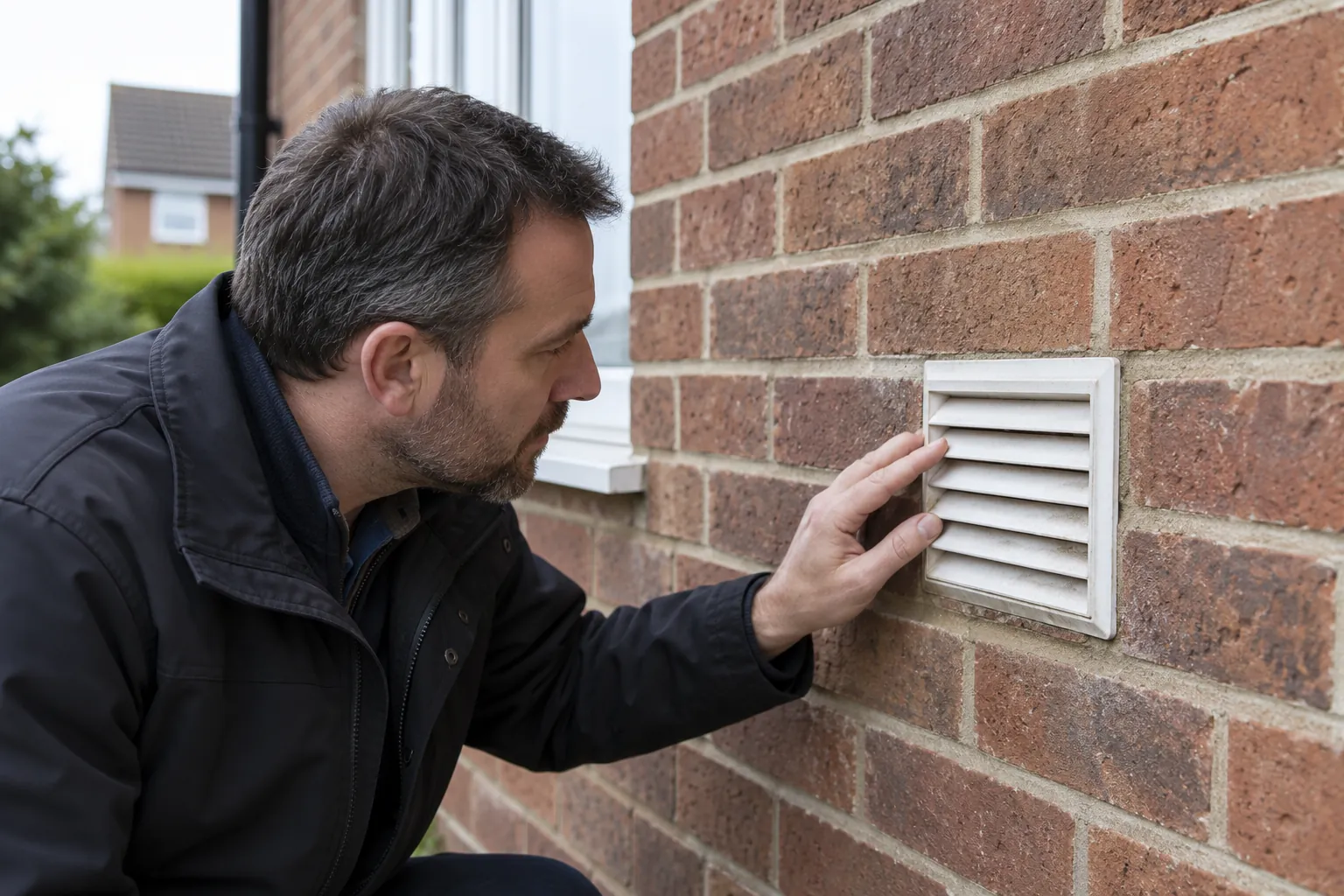

Distinguish an observation from a specification
The assessment may identify a blocked accessible grille, an uncertain route or a room where further performance checks would be useful. Those observations are not a complete specification for a new ventilation system. Equipment selection, installation positions, electrical arrangements and building constraints need appropriate assessment before work is commissioned. Ask whether a recommendation concerns use, maintenance, testing or installation, because these are different actions. A proposed check should also explain the question it is intended to answer. Do not infer that any particular equipment is supplied or fitted by this service. Keeping assessment separate from installation helps avoid committing to a product before the property requirements and the actual cause of retained moisture are understood.
Plan improvements around access and permissions
In a flat, shared building or rented home, ventilation routes and outside alterations may involve permissions beyond the room itself. Explain these arrangements early. The next step might require access to another area, a managing agent’s approval or a suitable contractor’s review. None should be assumed from an enquiry about condensation. If changes are recommended, clarify which are simple operational suggestions and which involve work to the building. Retain records of previous ventilation installation or maintenance where available, since they can help the relevant contractor. The assessment can identify the need for that work without promising access to concealed components or authorisation to alter shared features.
Check the effect of agreed actions
Practical changes should have a clear purpose and a way to review whether the observed condition improves. Note the rooms, timing and moisture pattern before and after any agreed action, without treating a short-term change as proof that all causes have been resolved. If mould remains, removal may need a separate treatment scope. If dampness persists despite an apparent ventilation improvement, further investigation of cold surfaces, leaks or water ingress may be appropriate. Ask which outstanding questions should trigger another enquiry. For a Stanmore HA7 home, the useful handover is a sequence of manageable decisions: what can be acted on now, what needs a contractor, and which limitations remain unresolved.
Evidence and the next decision
| Visible sign or situation | Evidence to consider | Useful next check |
|---|---|---|
| Bathroom extractor | Visible condition and accessible arrangement | Confirm any need for specialist performance checks |
| Kitchen moisture | Generation and existing extraction context | Review use and accessible routes |
| Background vent | Obstruction and accessible opening | Discuss appropriate next action |
| Concealed duct | Unknown condition or termination | Record limits and seek suitable access |
Scope and practical limits
| Part of the assessment | Limitation to understand | Next action |
|---|---|---|
| Electrical components | Assessment is not electrical repair | Use a suitable qualified contractor |
| Concealed ductwork | Parts may be inaccessible | Agree further investigation |
| Building alterations | Permissions may apply | Check responsibility before commissioning |
| Results | Moisture has several influences | Review the pattern after changes |
Questions about condensation & ventilation assessment
Can a noisy fan still be ineffective?
Yes. Noise alone does not establish airflow or show that an extraction route is suitable. Explain what you have noticed and ask which checks are included. Further performance testing or a contractor inspection may be appropriate before deciding whether equipment needs attention.
Should I remove the fan cover before the visit?
Do not dismantle electrical equipment solely to prepare. Explain access and any visible issue when enquiring. The proposed scope should set out what can be checked safely and whether a separate electrical or ventilation contractor is needed for further access or testing.
Will opening windows solve the problem?
Window use may influence moisture conditions, but it is not a universal answer. The room, weather, security and occupant circumstances matter. Advice should relate to the observed pattern and the existing ventilation, while other sources of dampness remain under consideration.
Can you recommend changes in a rented flat?
The assessment can discuss observed conditions and possible next steps. Any alteration may need the landlord, agent or building manager’s authorisation. Clarify who can approve work and obtain an appropriate contractor assessment before assuming that a recommendation can be installed.
Does this include removing existing mould?
Assessment and mould removal are separate scopes. Explain the growth when you enquire so both needs can be considered. Improving moisture removal does not automatically remove existing affected material, and treatment should reflect its condition and any unresolved source of dampness.
Discuss the affected areas
Call with the property location, the affected rooms and a brief history. We can discuss the proposed scope and what information is needed before a visit is agreed.